
CASE STUDY
The Connor Brothers
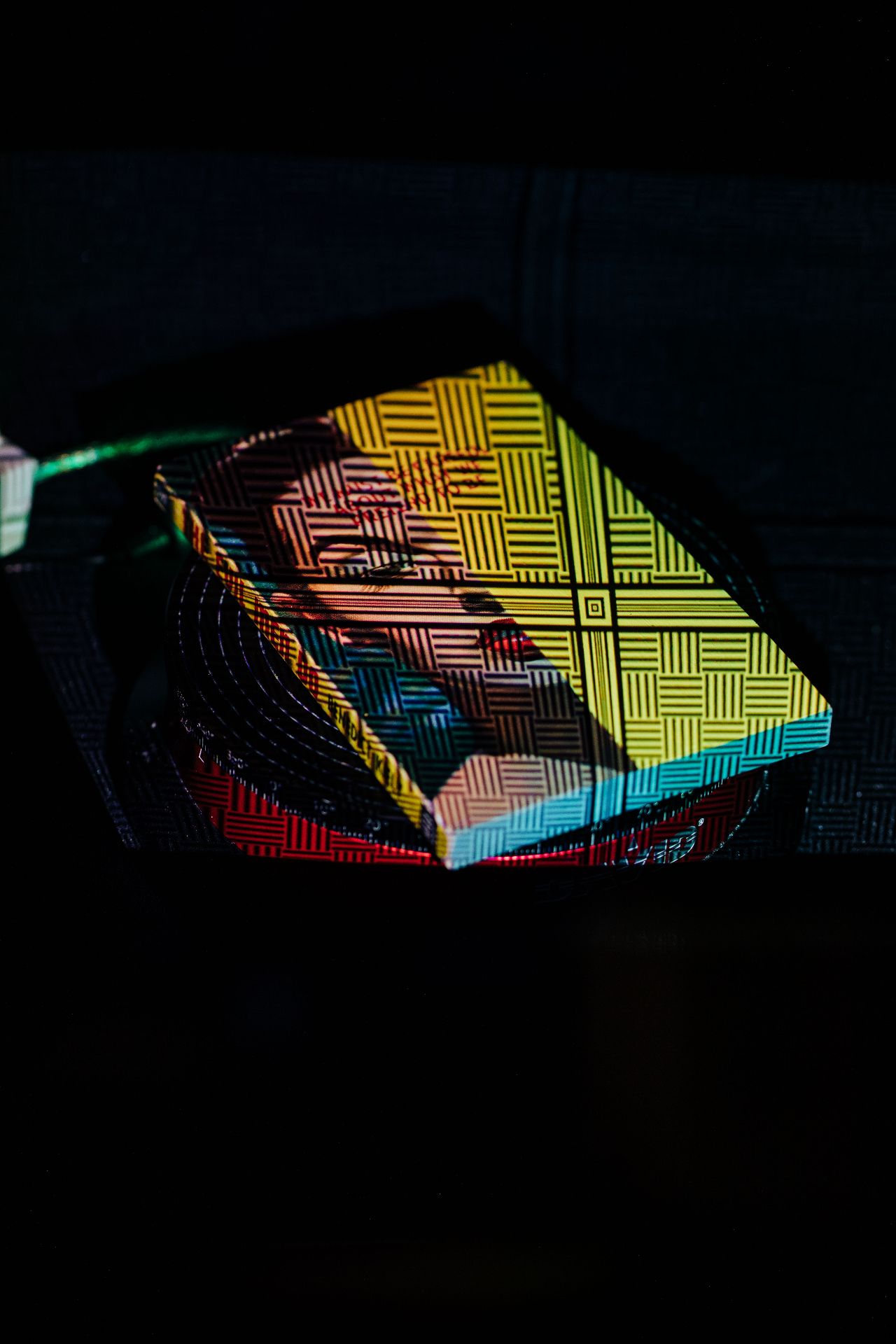
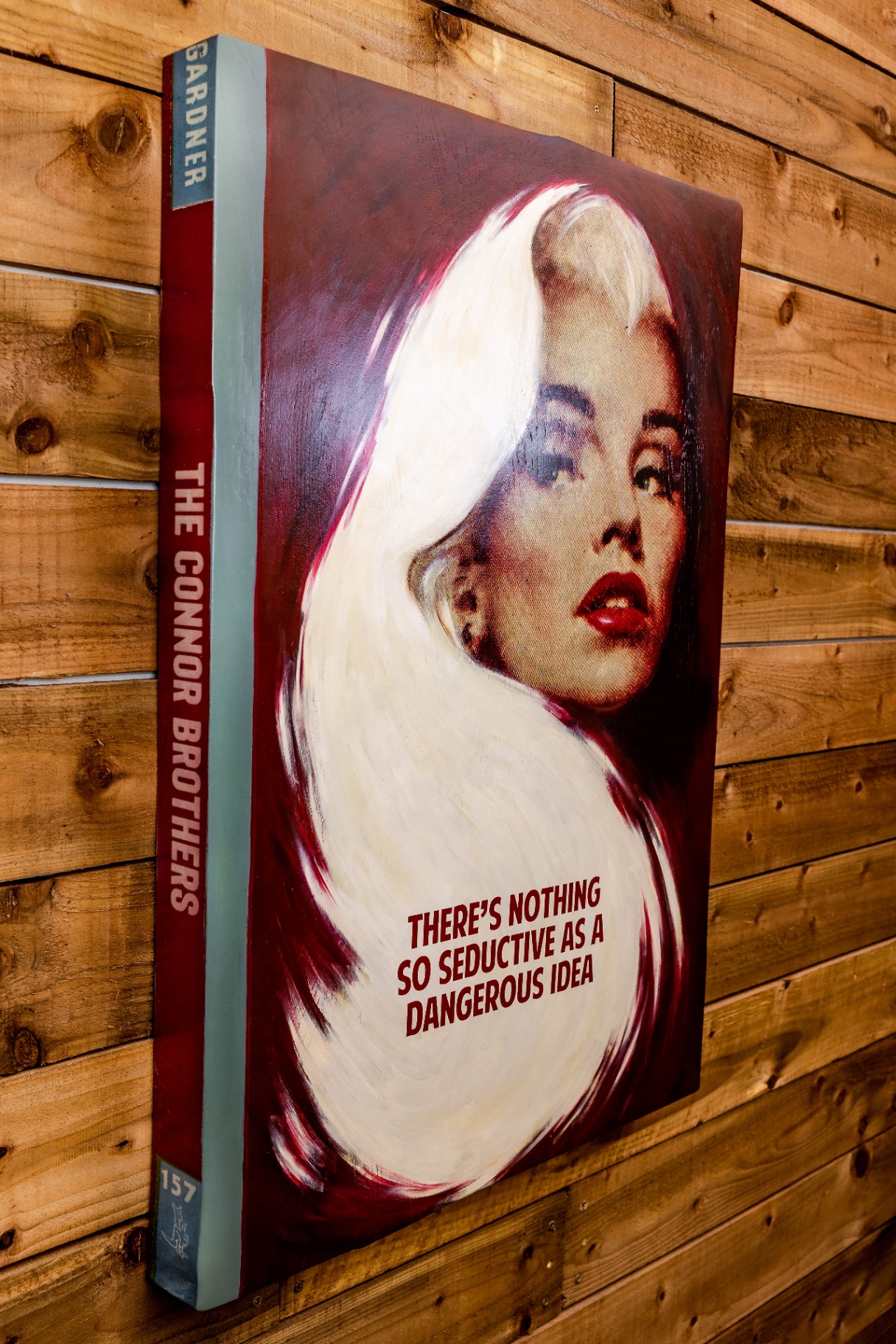
Jumbo paperback books in solid white oak — 3D scanned, CNC-machined, UV-printed on a modified Roland and shipped to London for the artists' tenth anniversary show at Maddox Gallery.
CASE STUDIES — 05

PRJ-014a
Jumbo Paperback Books in Solid White Oak — Maddox Gallery
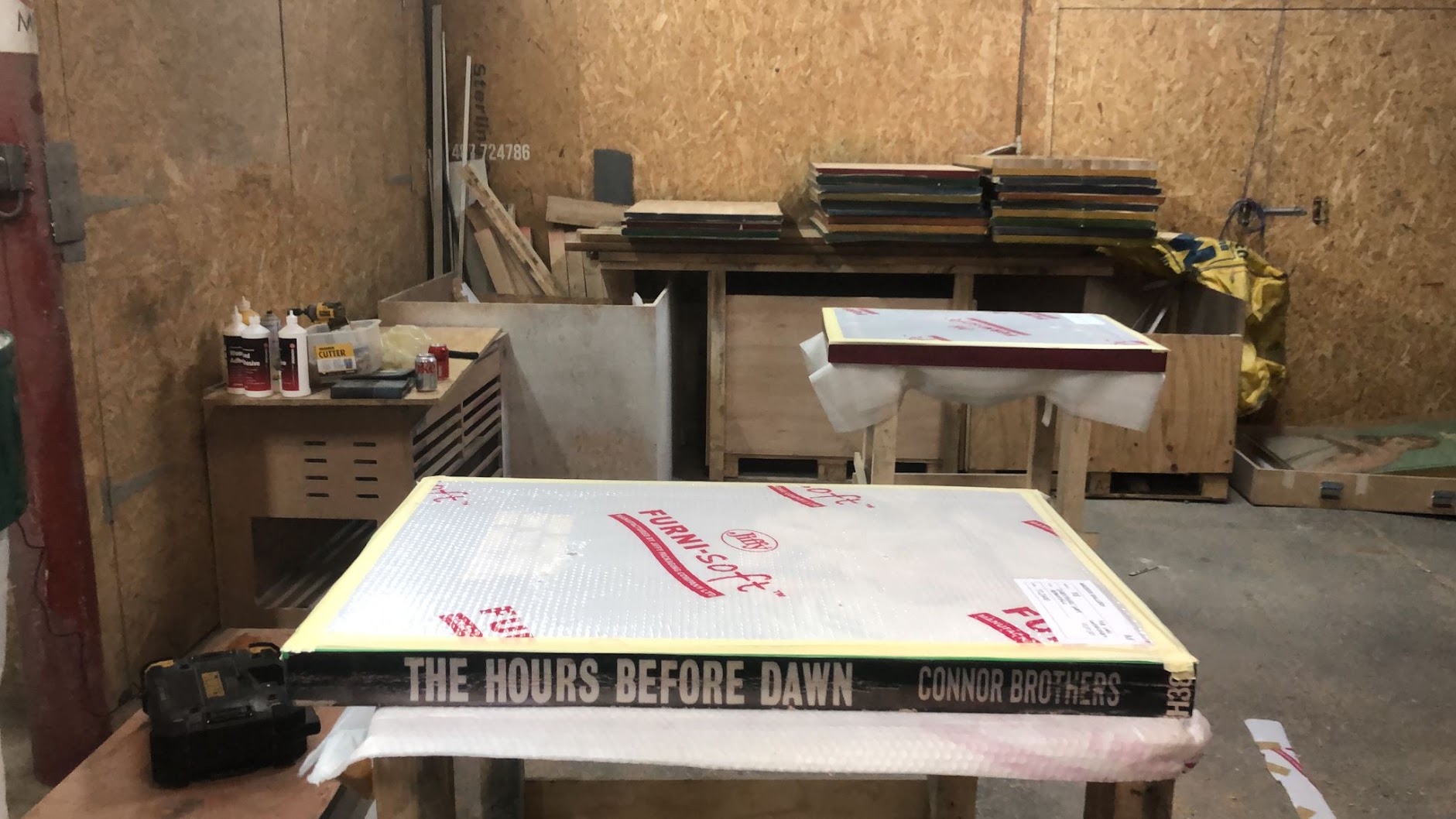
A five-year problem two other manufacturers — including one in Siberia — couldn't crack. Real paperback 3D scanned, scaled up, machined in solid white oak, and UV-printed on a Roland we modified to accept 750mm-tall media.
PROCESS
- 013D scan a real paperback — every detail captured
- 02Model and scale to jumbo size
- 03CNC machine in solid white oak on our routers
- 04Prime and prep for UV print
- 05Visit Roland HQ, Bristol — engineer a fix for 750mm-tall media
- 06Modify our UV printer in Aberdeen
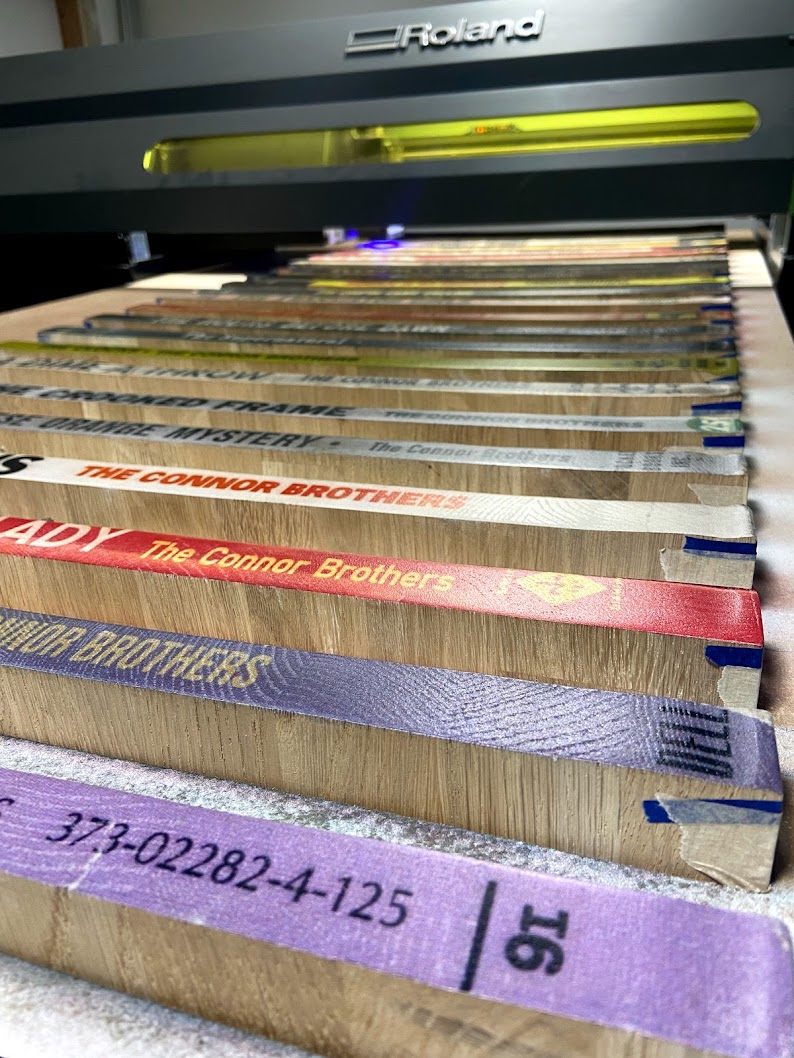
- 07Print faces, bindings and page edges
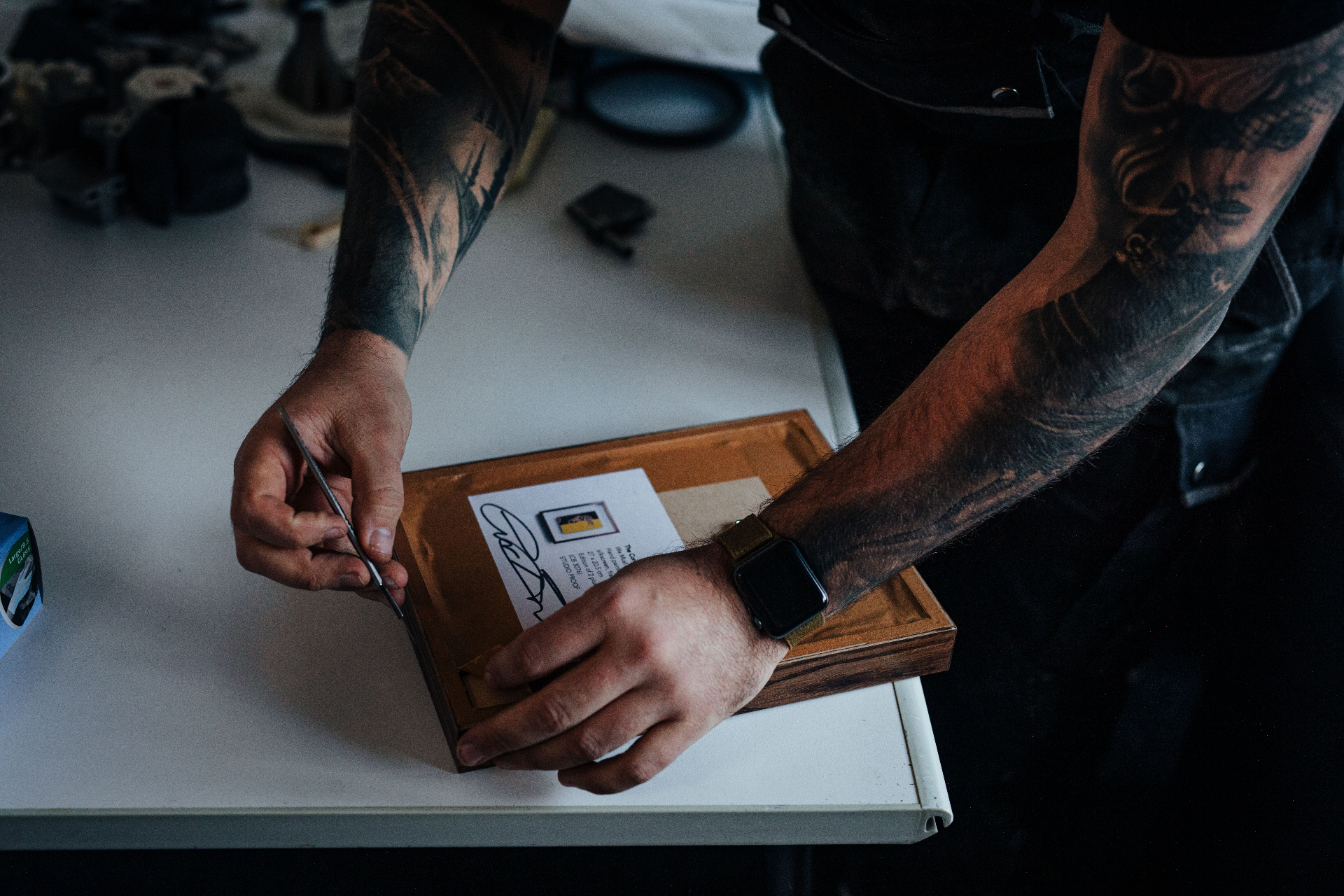
- 08Ship to London for artist hand-finish & embellishment
- 09On sale — Maddox Gallery, 10th anniversary show
CASE NOTES
The Connor Brothers are London-based artists best known for painting on paperback books. For their tenth anniversary exhibition at the Maddox Gallery in London, they came to us with a challenge they'd been trying to solve for five years.
The brief was simple enough on paper. Take a paperback book. Scale it up to jumbo size. Recreate it in solid white oak.
Simple to describe. Not so simple to deliver. Two other manufacturers had tried before us, one based in Siberia. Neither could make it happen.
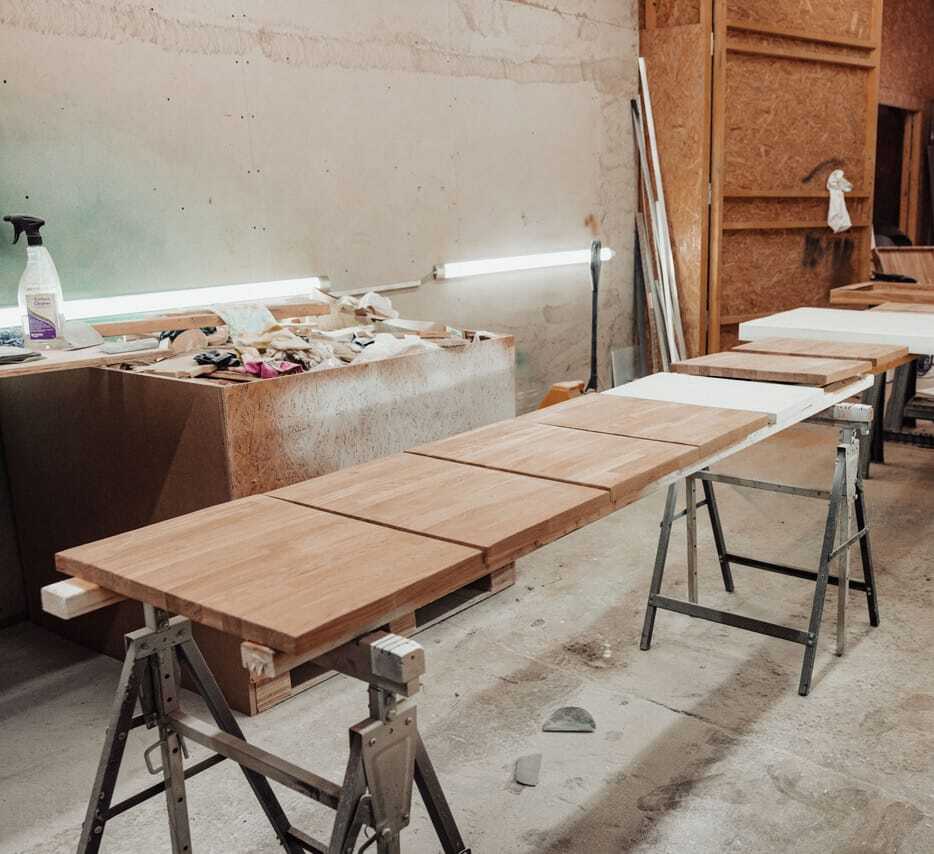
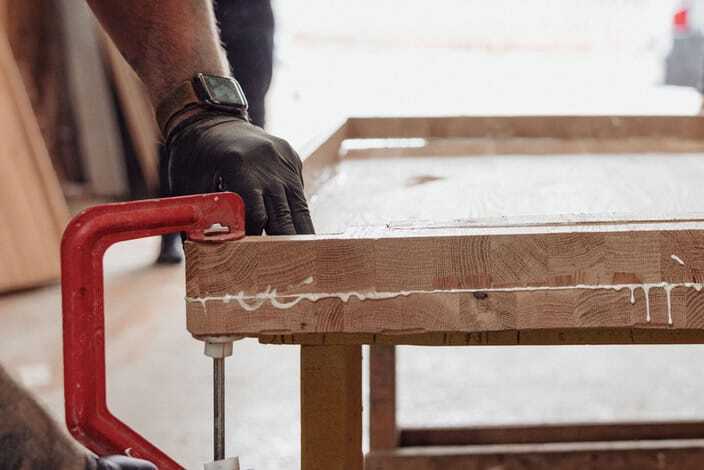
We started by 3D scanning a real paperback book, built out the model, then scaled it up. From there we machined the books on our CNC routers, recreating every detail in solid white oak. Once machined, the books were primed and ready for print.
The printing side is where it got interesting. The faces were straightforward. The bindings and page edges were not. Thickness wasn't the issue — at 50mm the books sat well within the 200mm our UV printer handles as standard. The problem was height. The books stood 750mm tall, and the machine was never designed to take media at that size.
Rather than work around it, we went to Roland's headquarters in Bristol and sat down with their team directly. We worked out what needed to change, came back to Aberdeen, and modified the machine ourselves.
Once printing was done, the books were shipped to London where the Connor Brothers hand-finished and hand-embellished each one before they went on sale at the Maddox Gallery.
Five years of dead ends. We turned it around.
EVIDENCE — 08 FRAMES
WORKSHOP / STUDIO / GALLERY
PRJ-014b
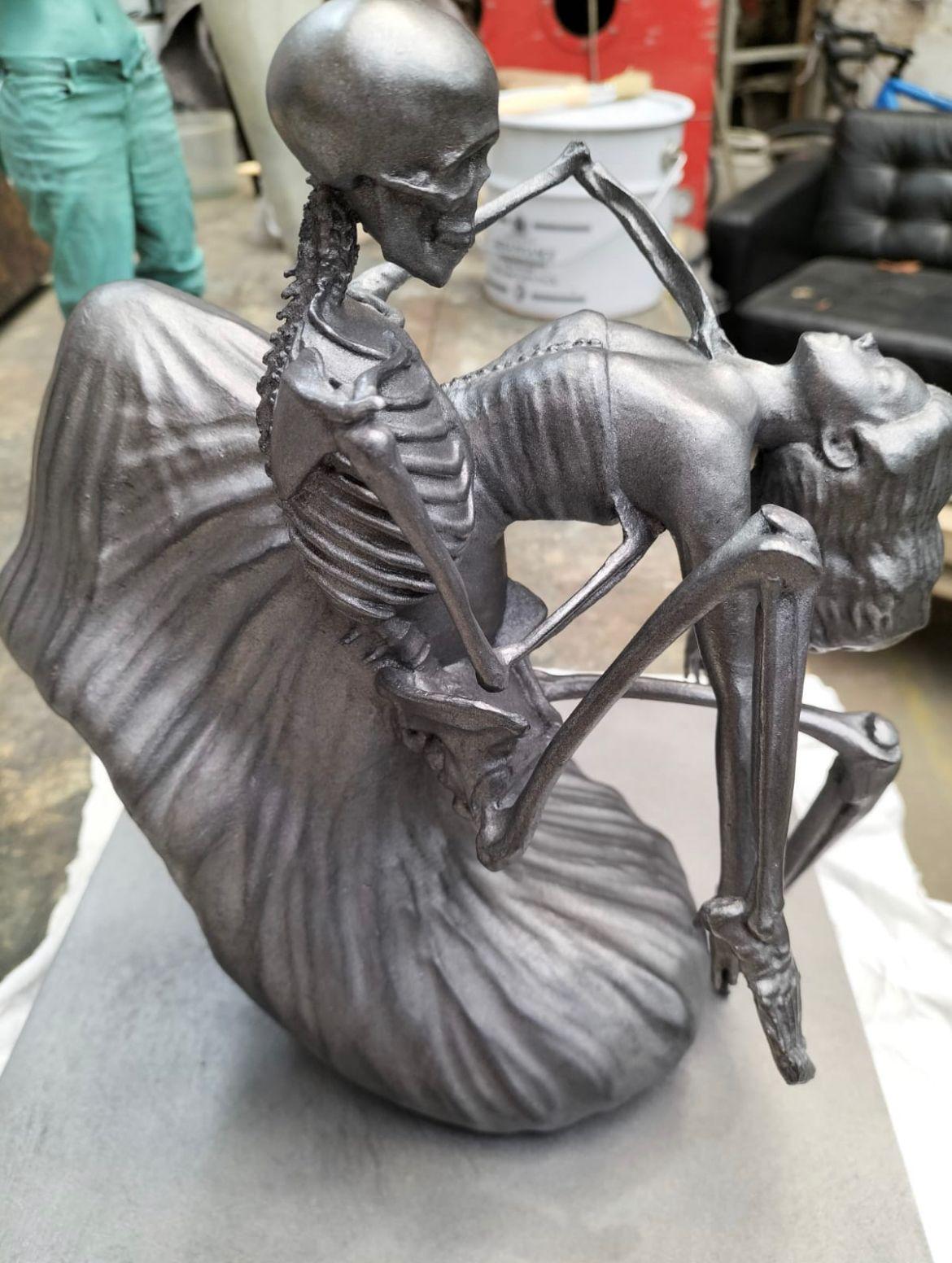
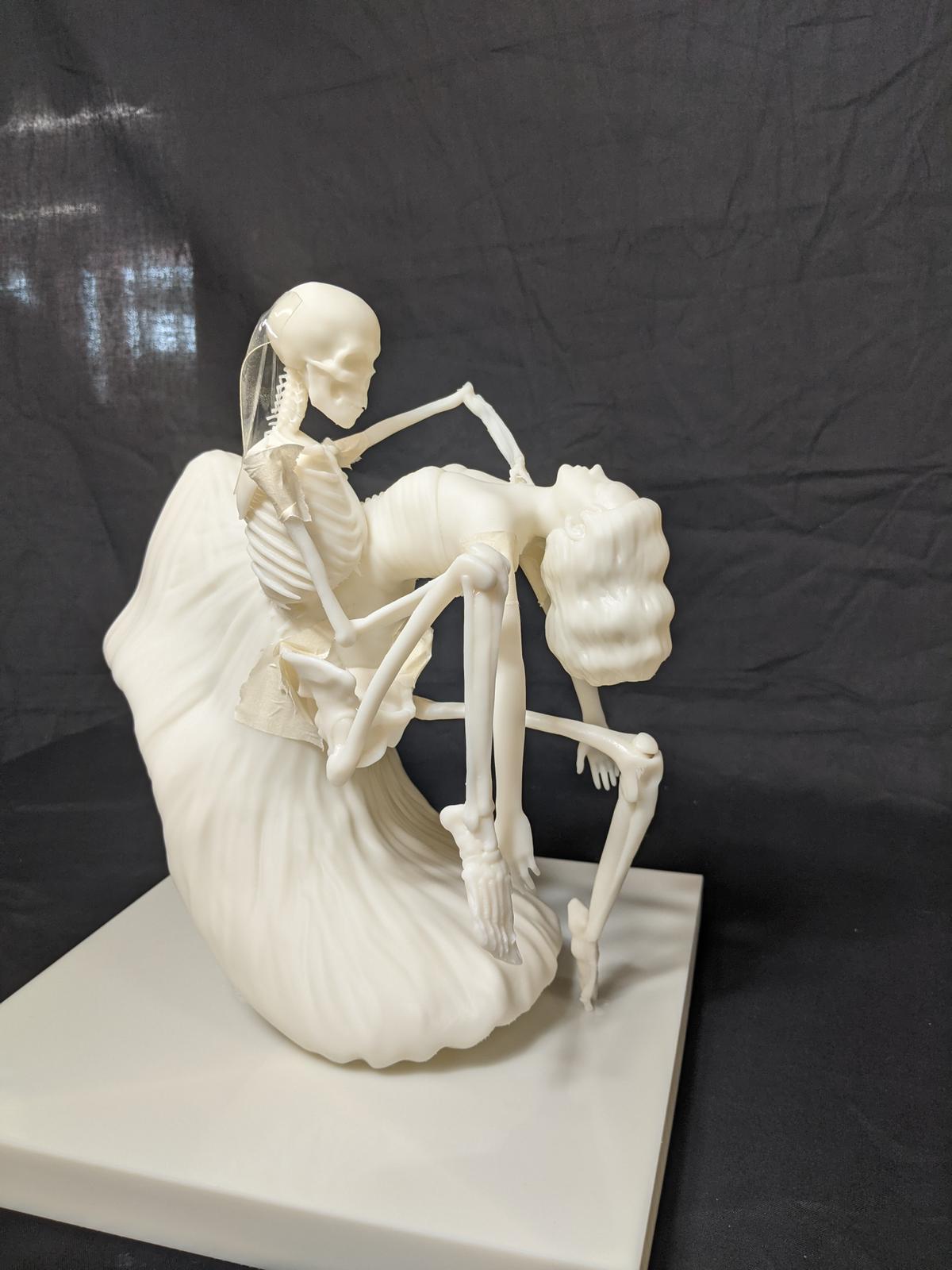
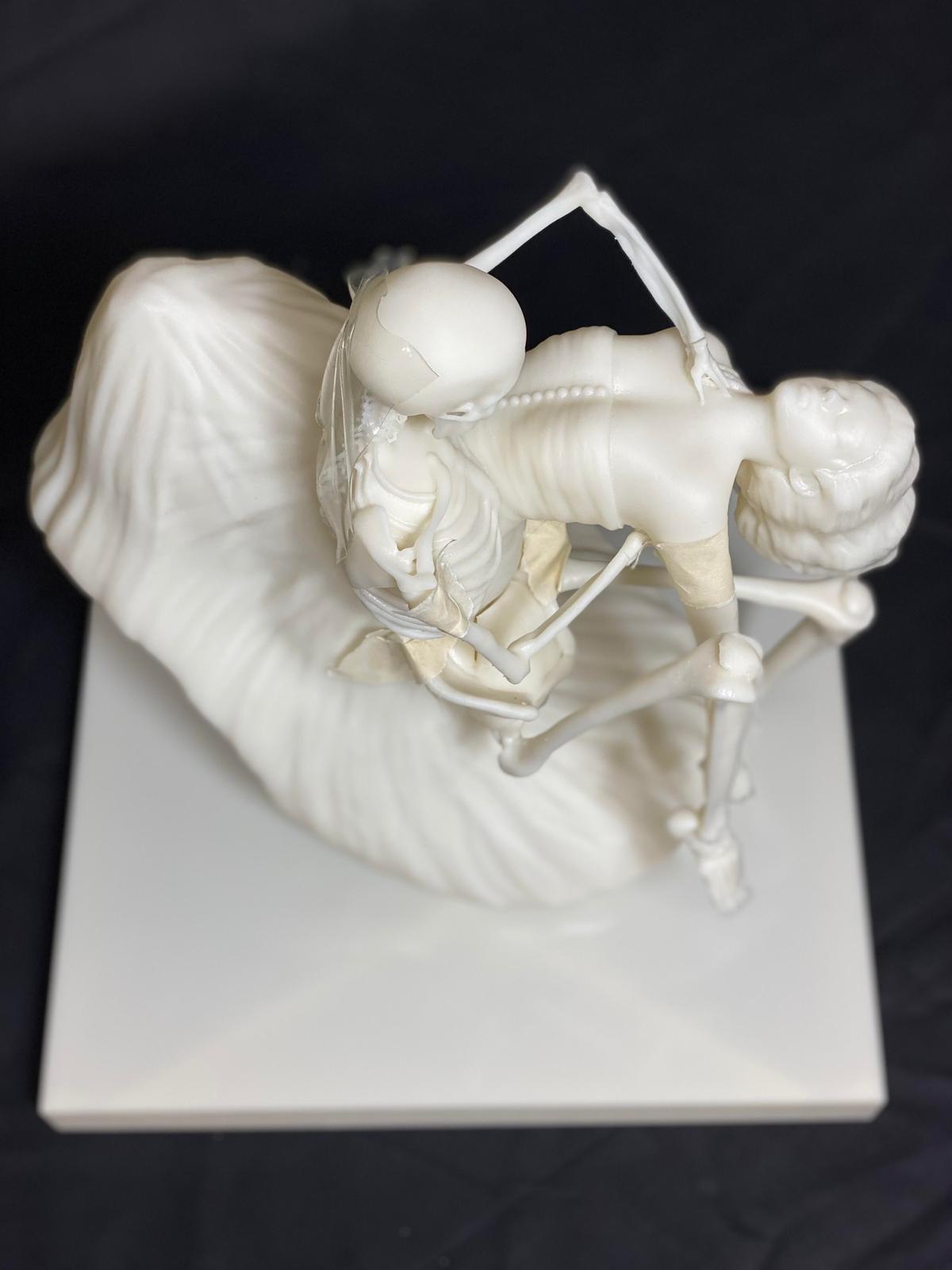
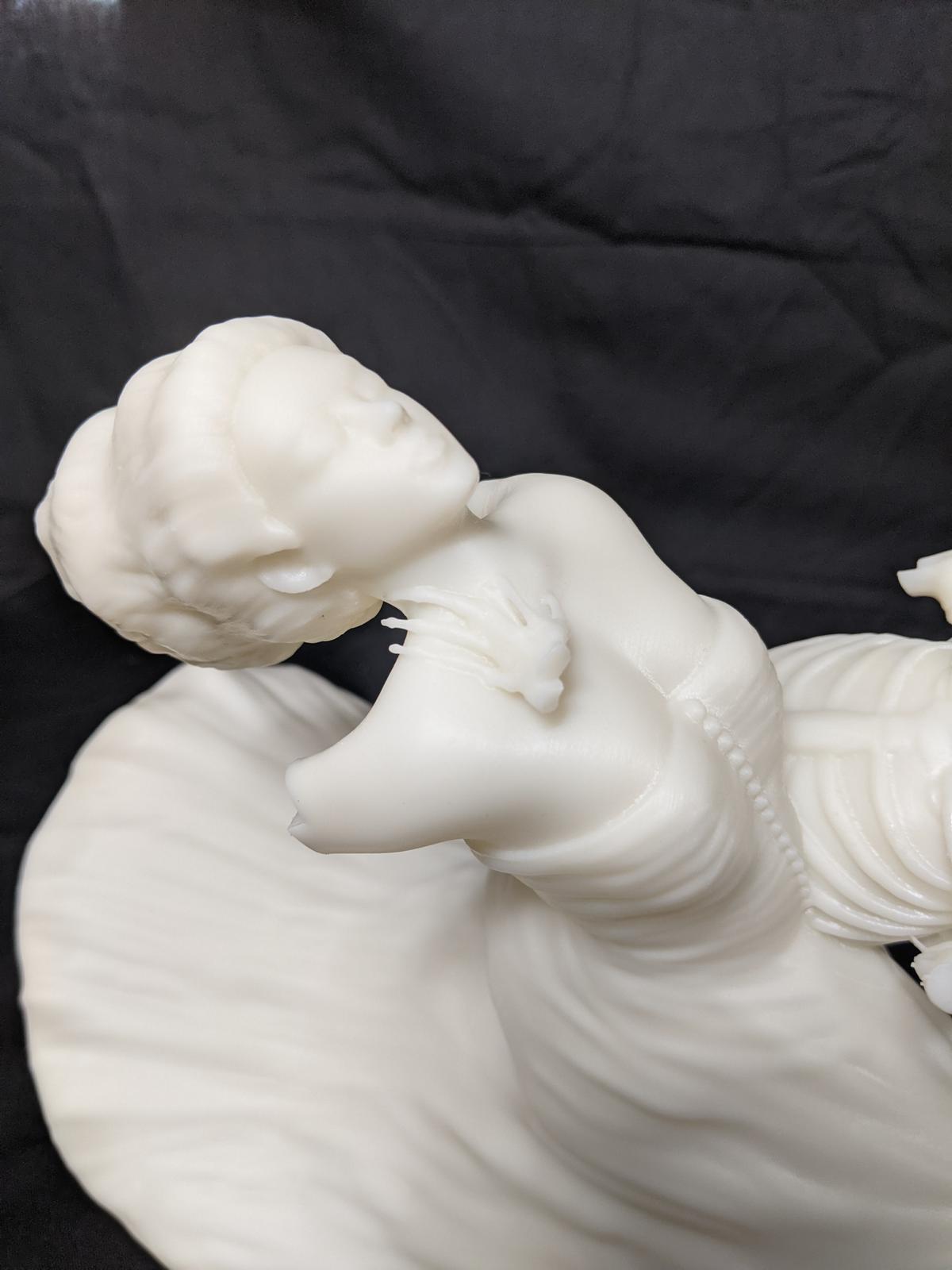
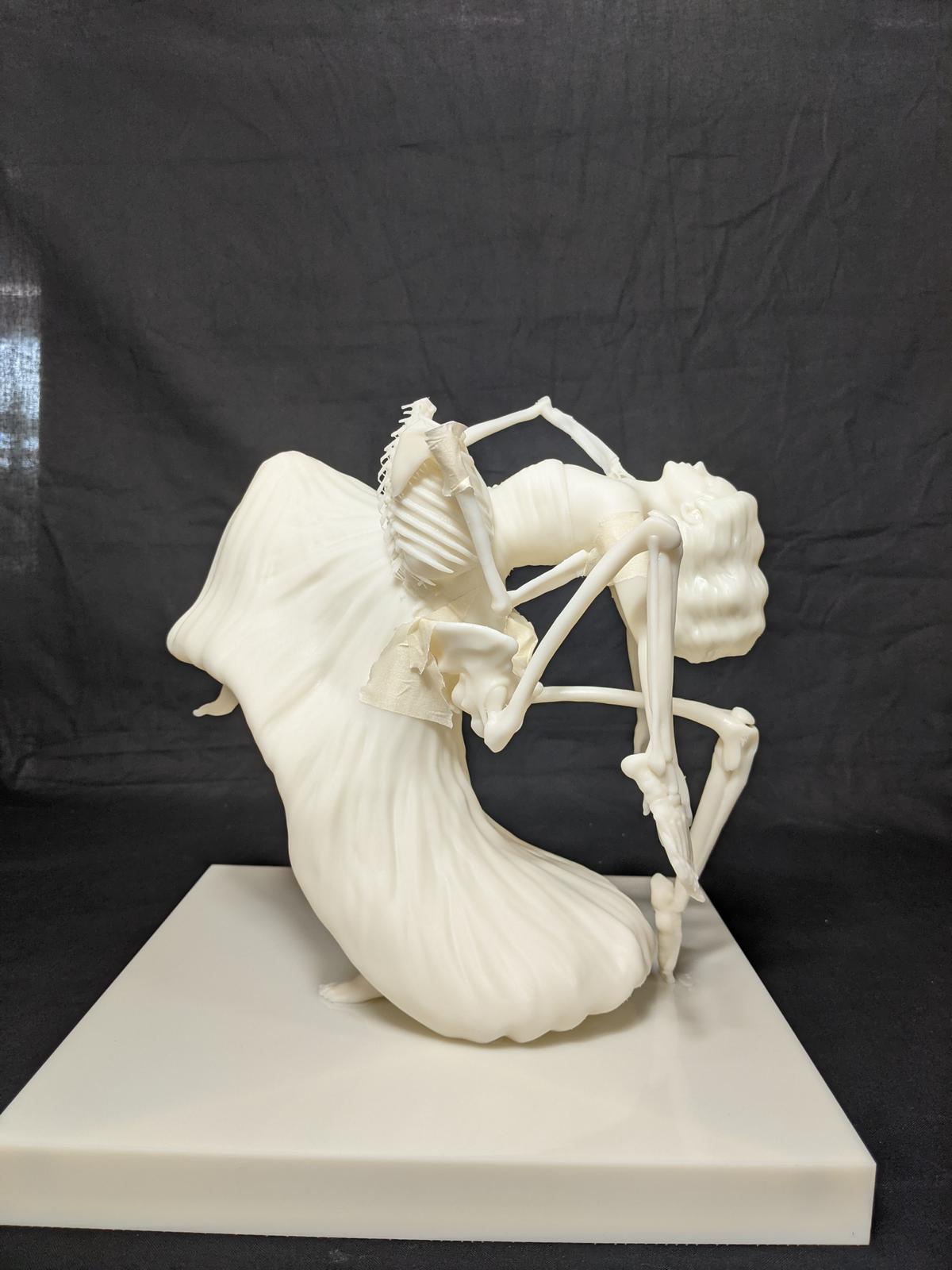
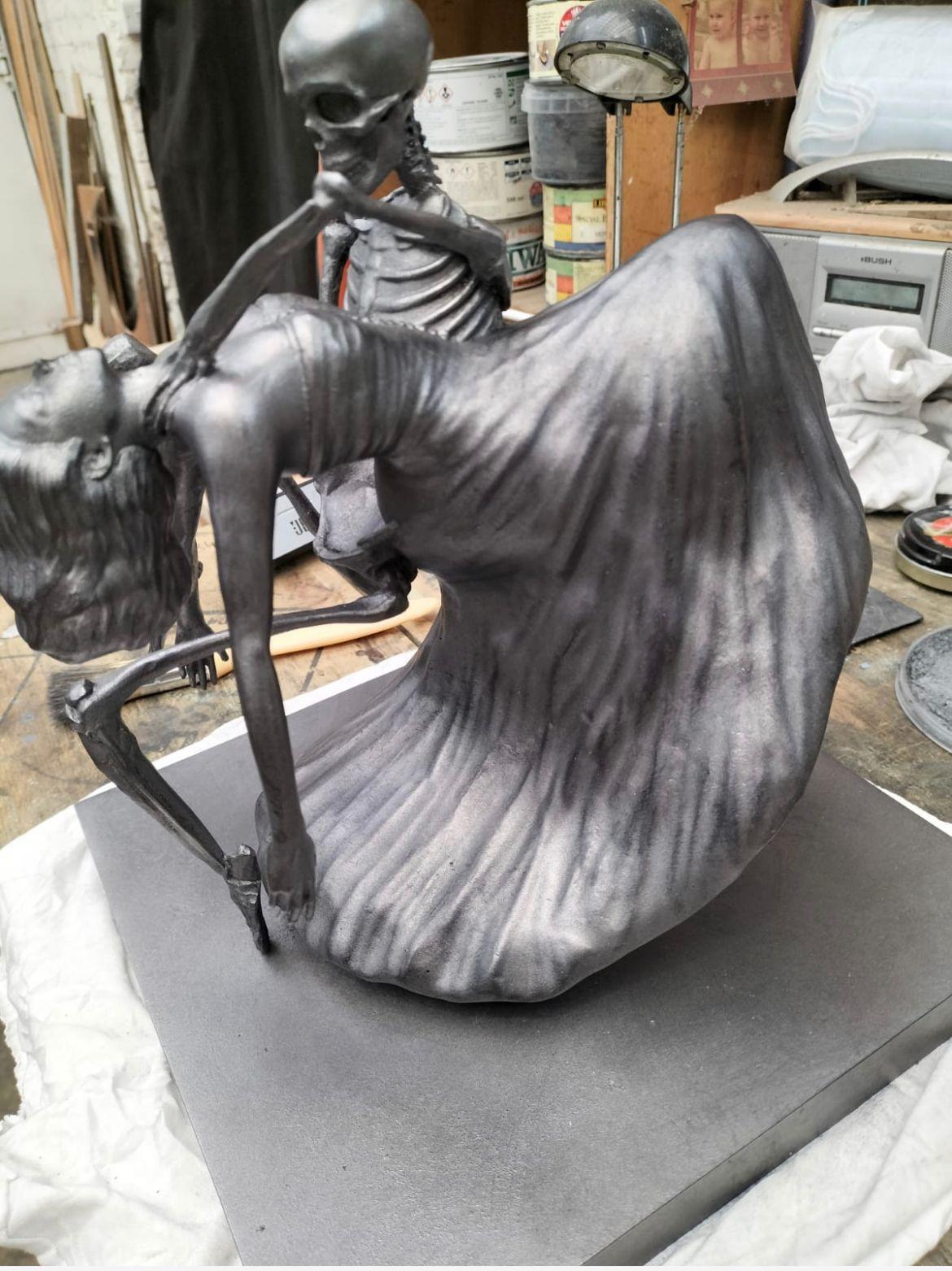
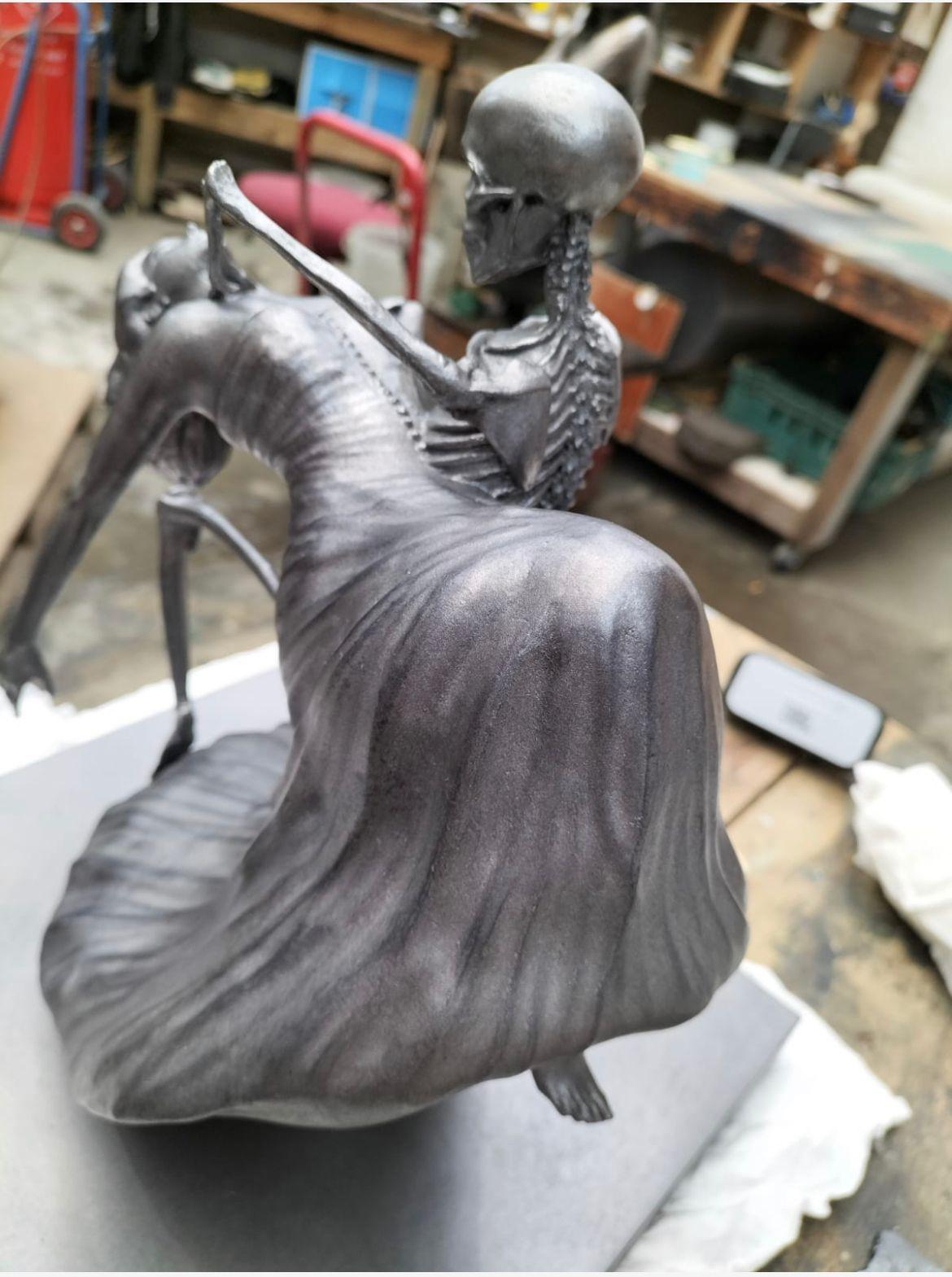
Skeletons in Your Closet — Cast in Bronze
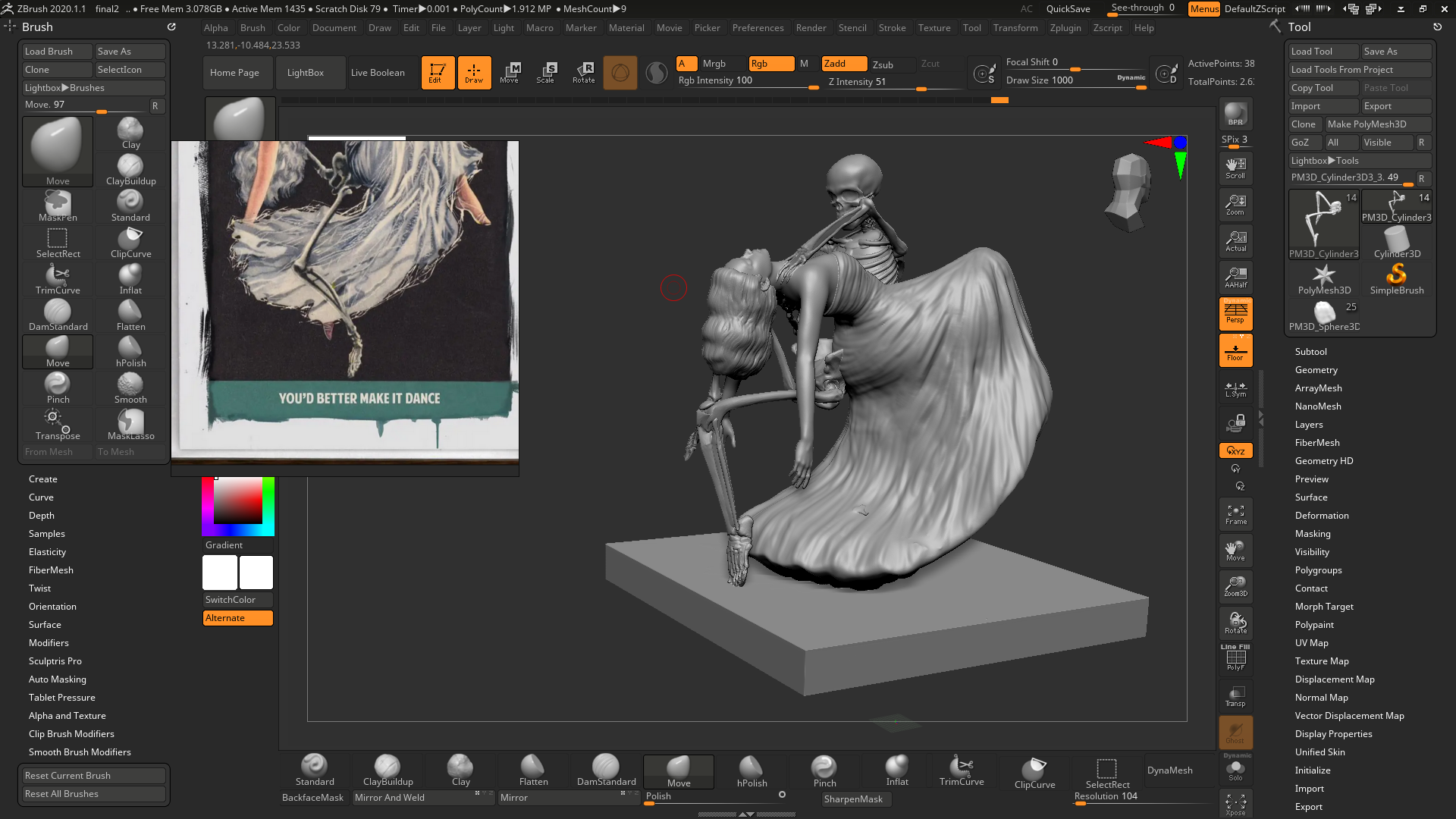
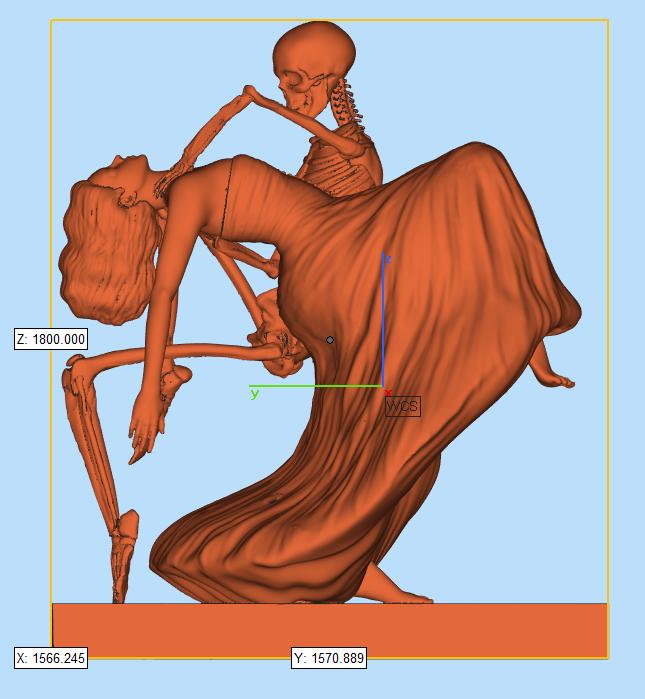
Translating one of the Connor Brothers' most recognised paintings into a fully sculpted 3D piece — every element modelled from scratch, printed, and cast in bronze. Limited edition of ten.
PROCESS
- 01Study the original painting — break the composition into sculptable elements
- 02Digitally sculpt each component in ZBrush, true to the artwork
- 03Build and assemble the full 3D model — figure, skeleton, drape, base
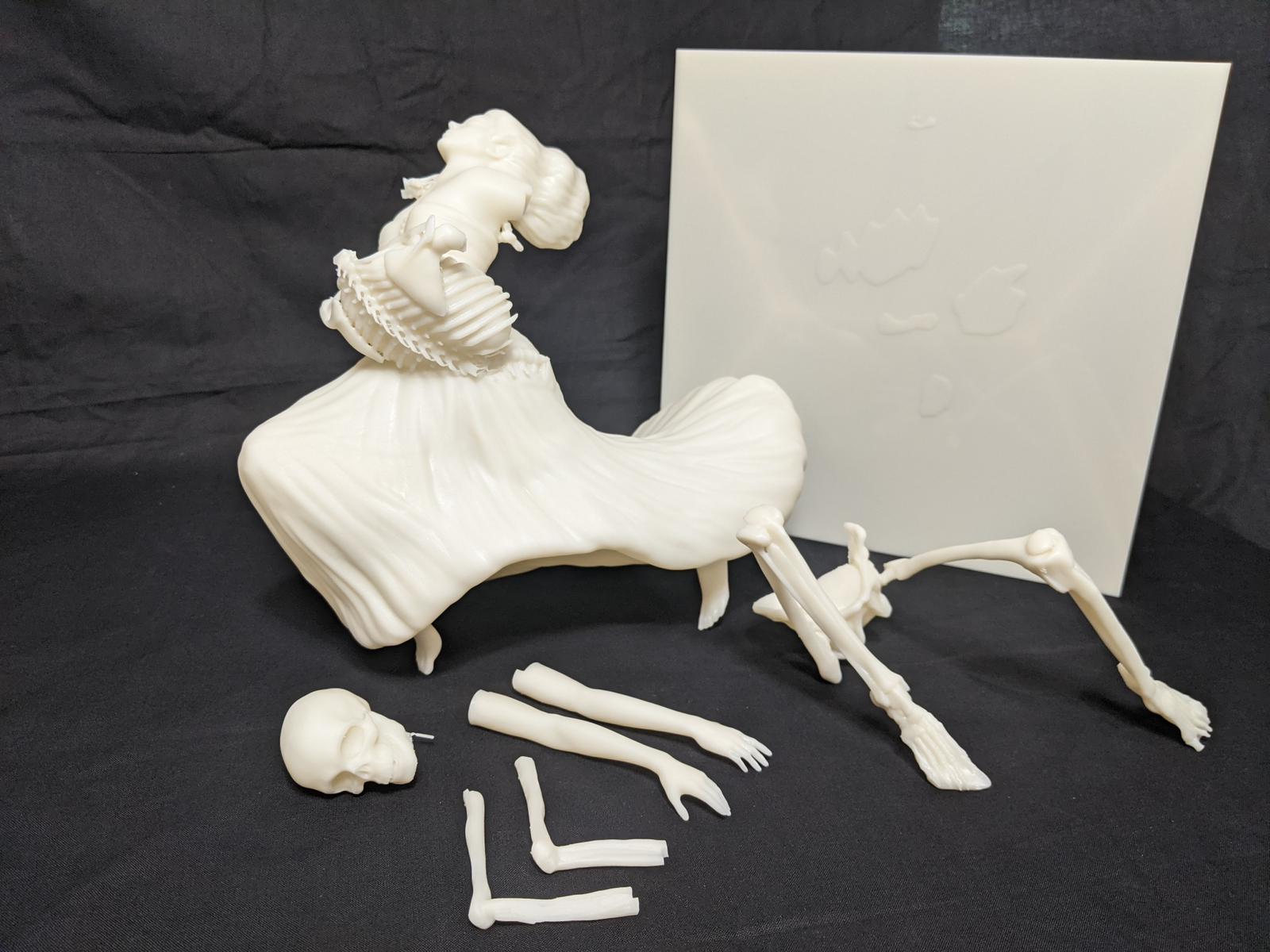
- 04Engineer parts for printing and casting — splits, supports, tolerances
- 053D print the components in plastic
- 06Hand-fit and dry-assemble for proof
- 07Send to the foundry for bronze casting
- 08Patina and finish — limited edition of ten
CASE NOTES
The Connor Brothers have a well-known piece. The text reads: "If there are skeletons in your closet, you better make them dance." The artwork features a woman dancing with a skeleton.
They wanted it in three dimensions.
Our job was to take every element of that composition and build it out as a full 3D sculpture — each component modelled individually, accurate to the original artwork, and engineered for casting.
Once the 3D models were complete, the pieces were printed in plastic. From there they went to the foundry to be cast in bronze.
The edition was limited to ten pieces.
EVIDENCE — 10 FRAMES
WORKSHOP / STUDIO / GALLERY
PRJ-014c
Da Vinci Frame Replica — Solid White Oak
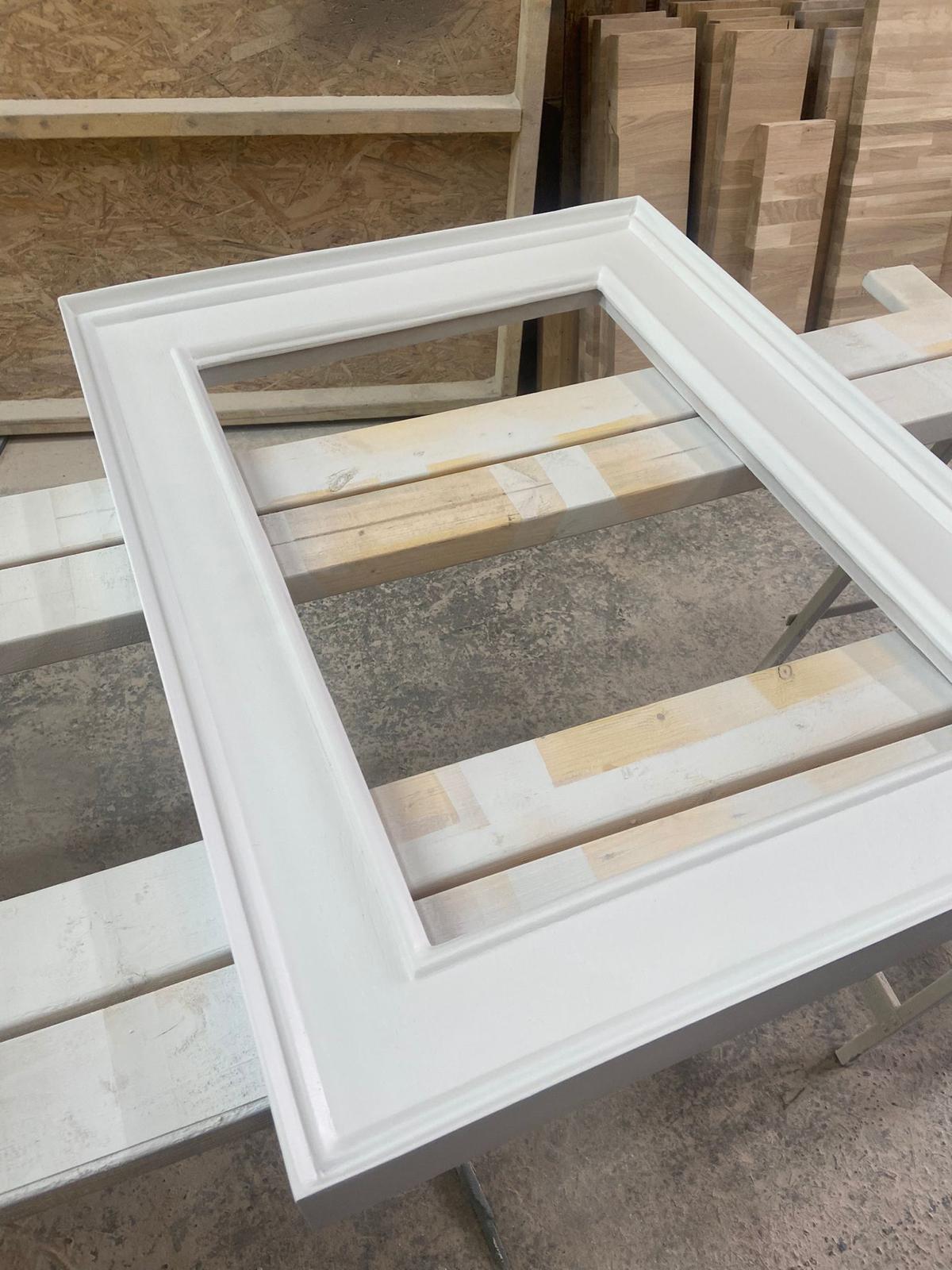
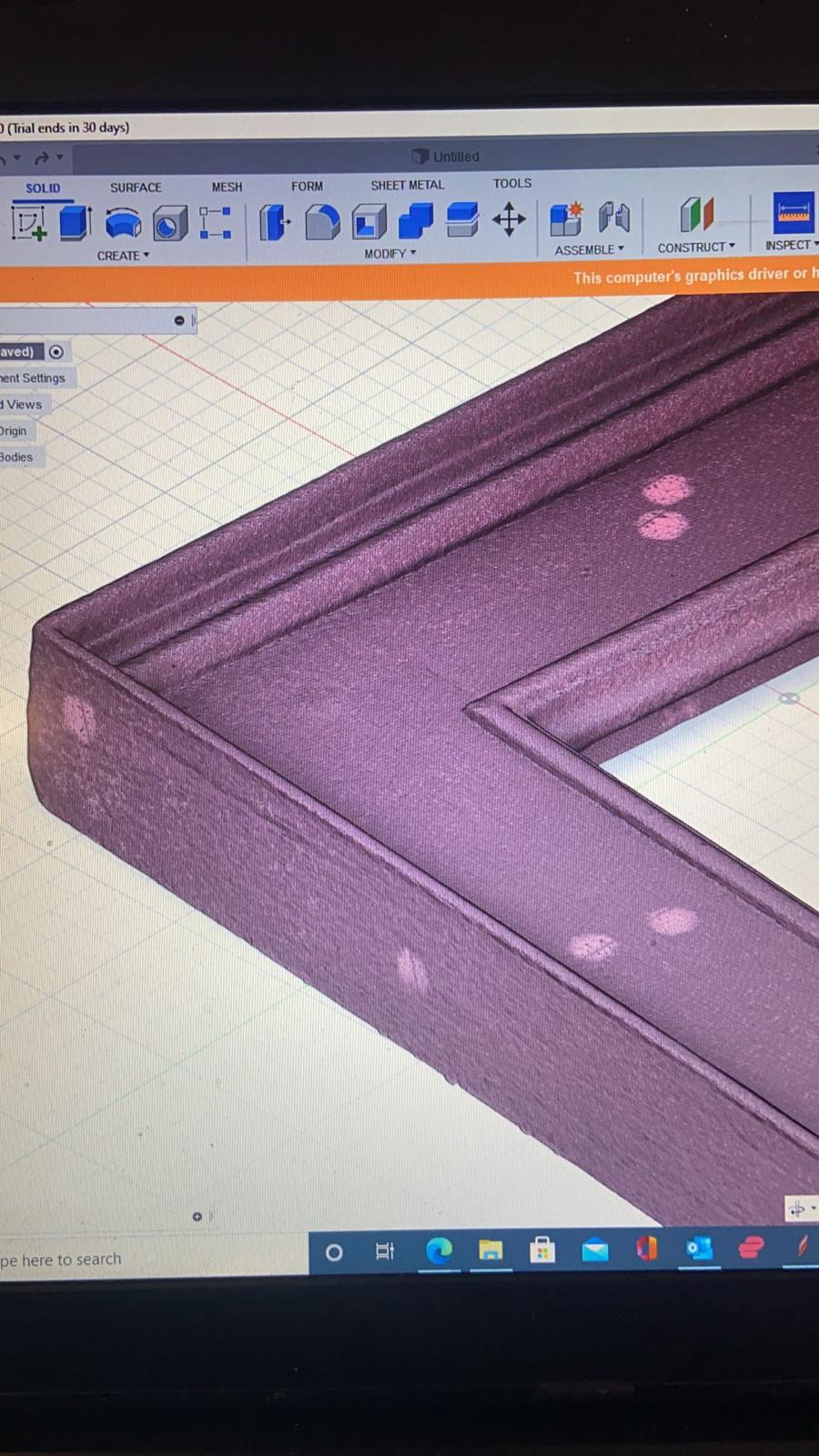
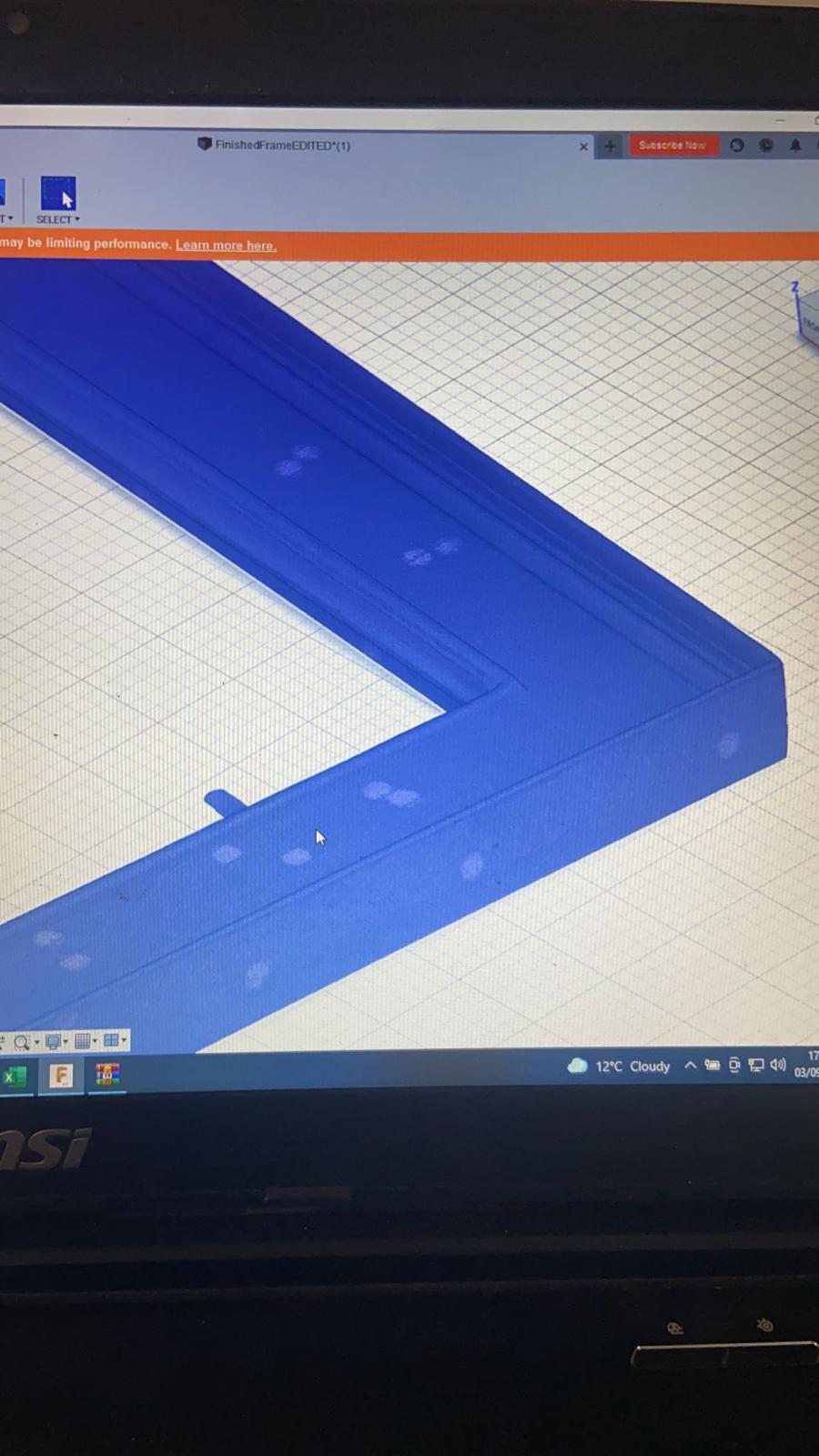
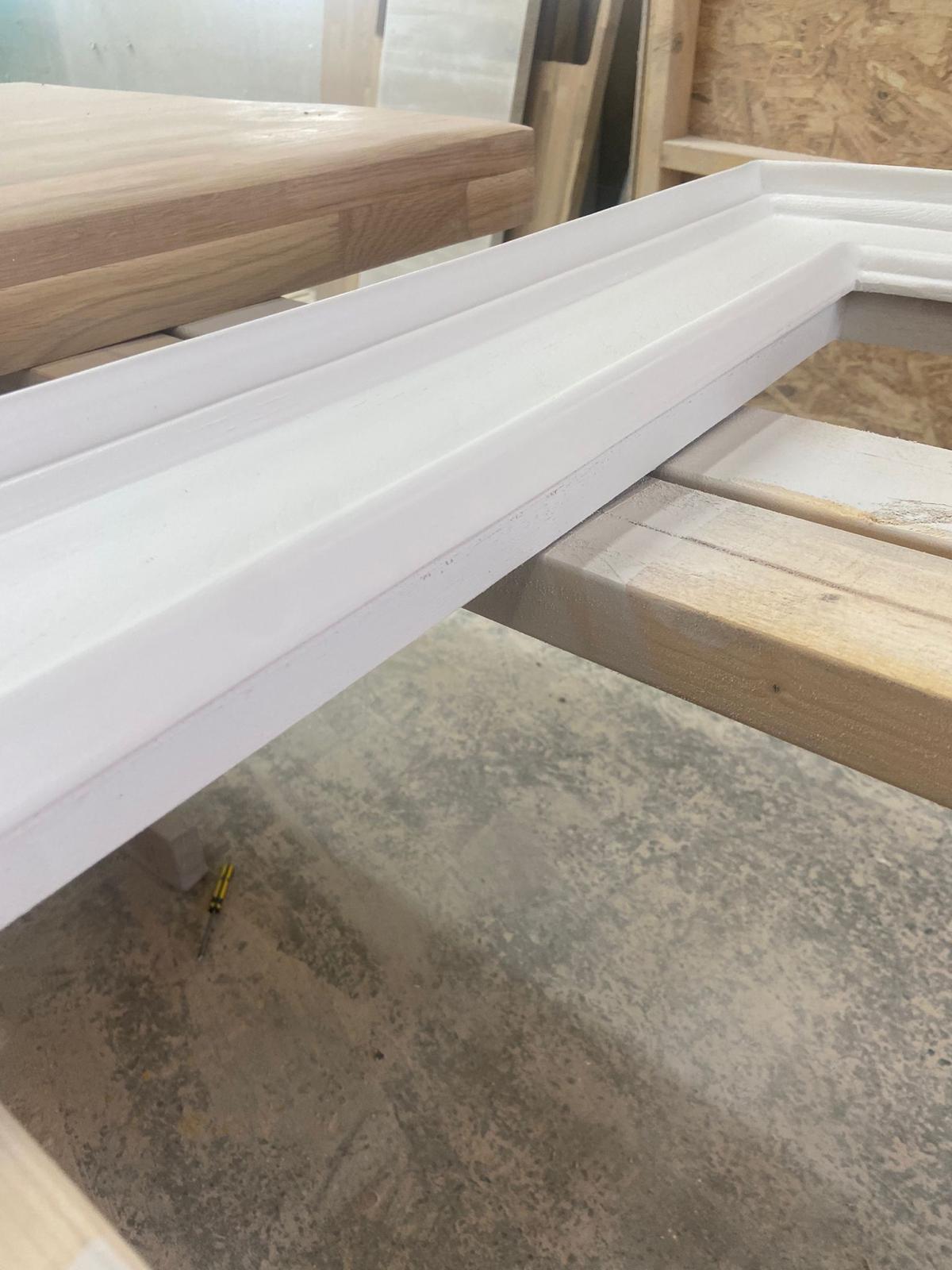
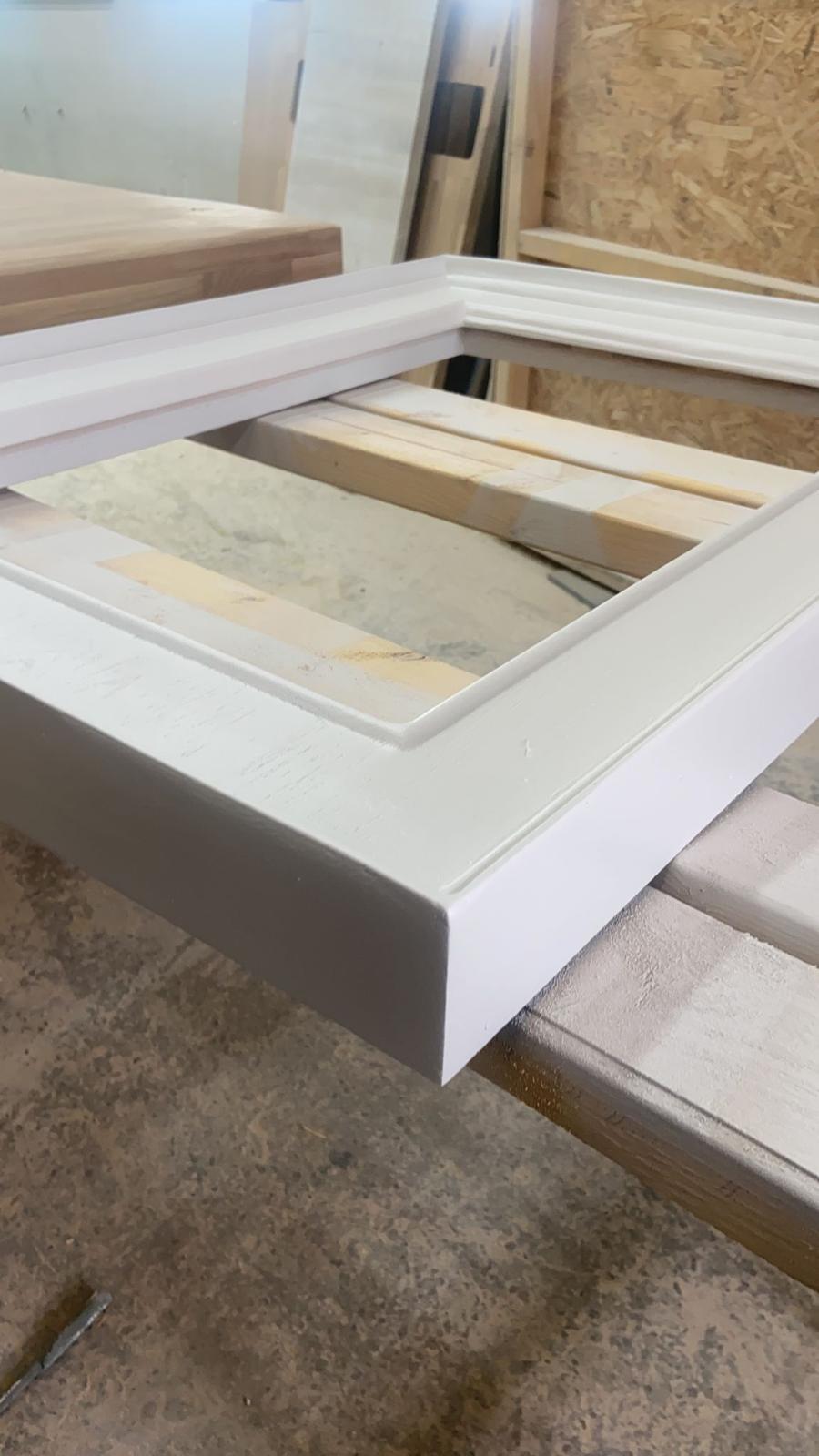
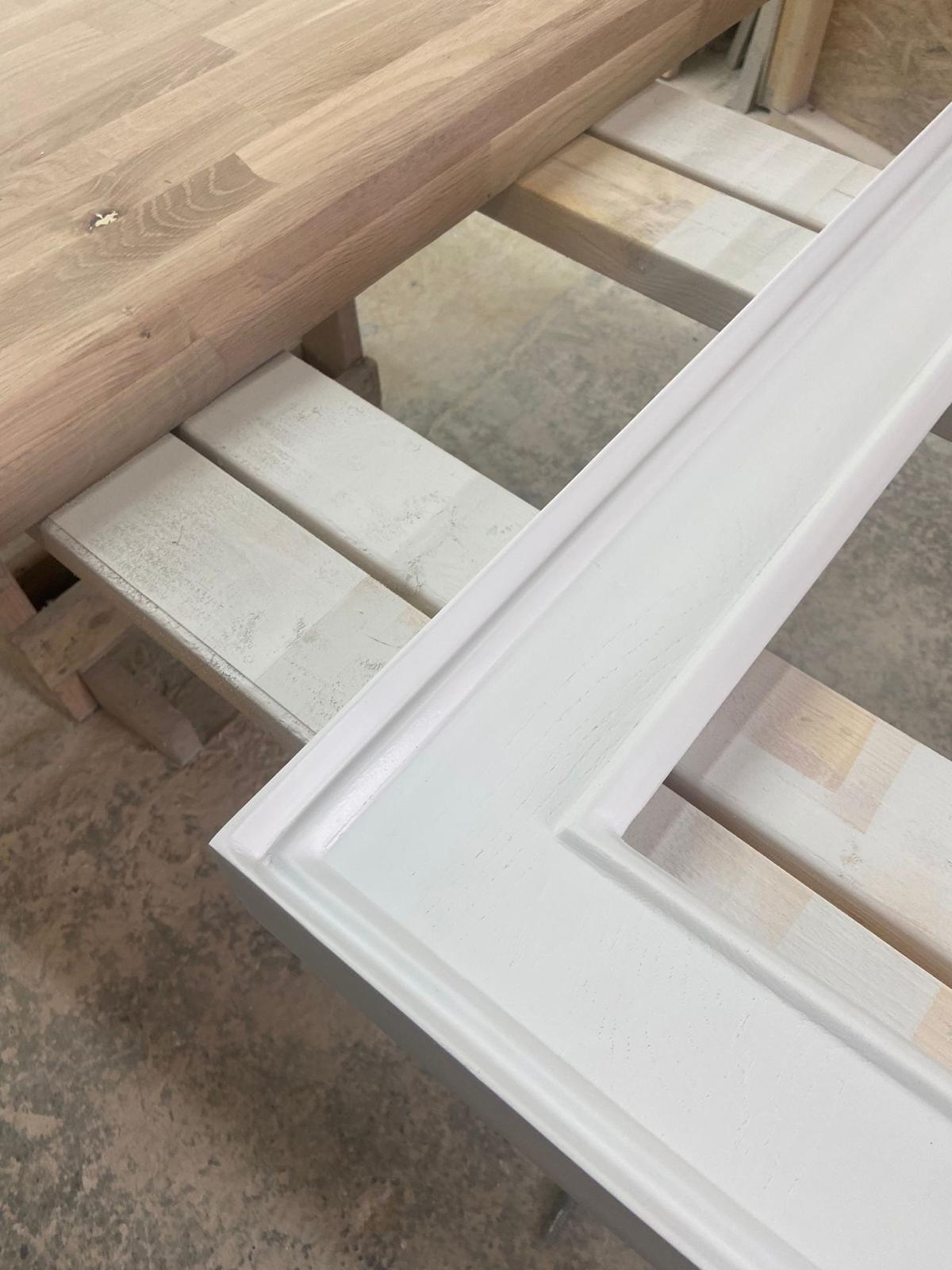
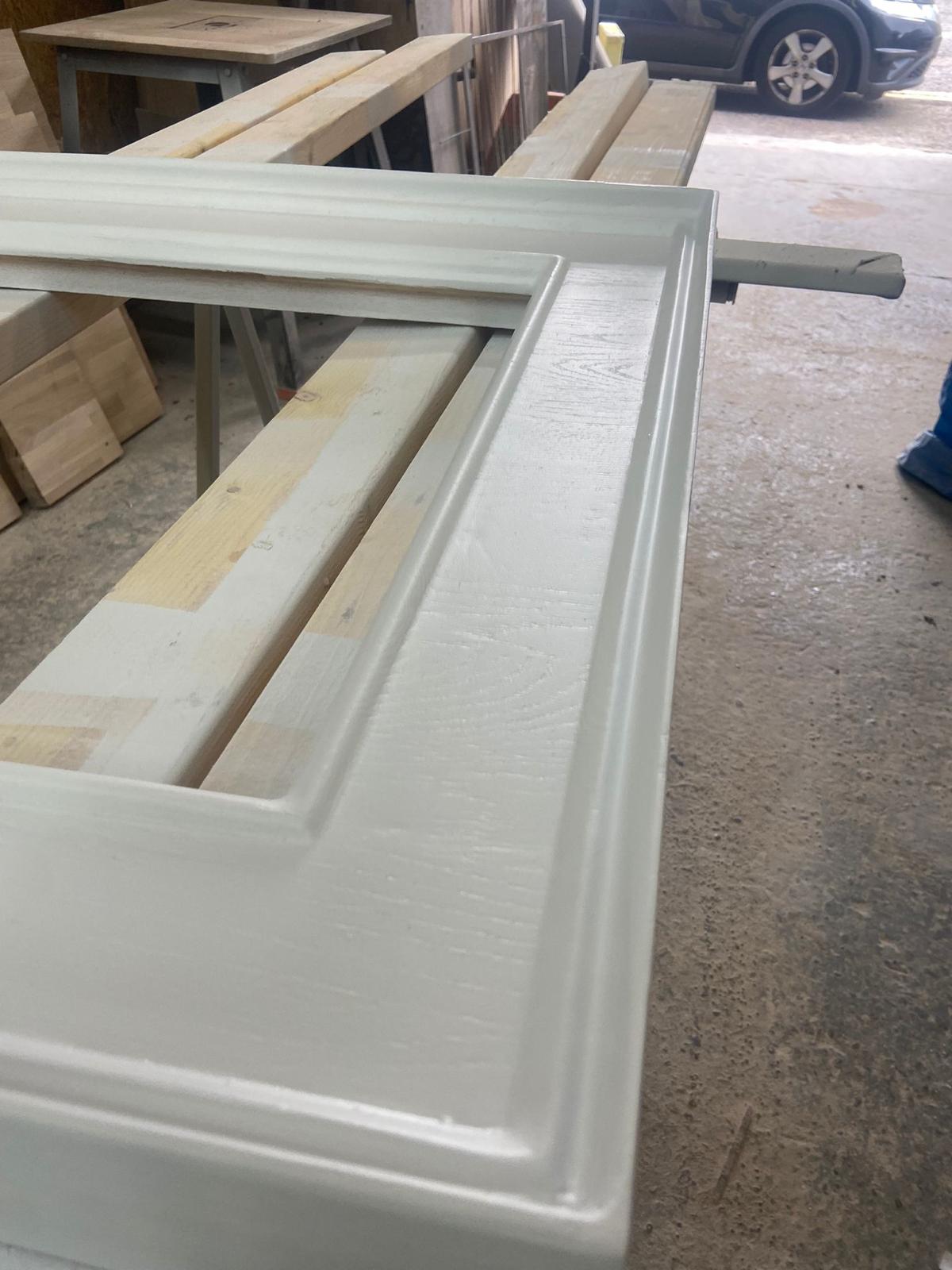
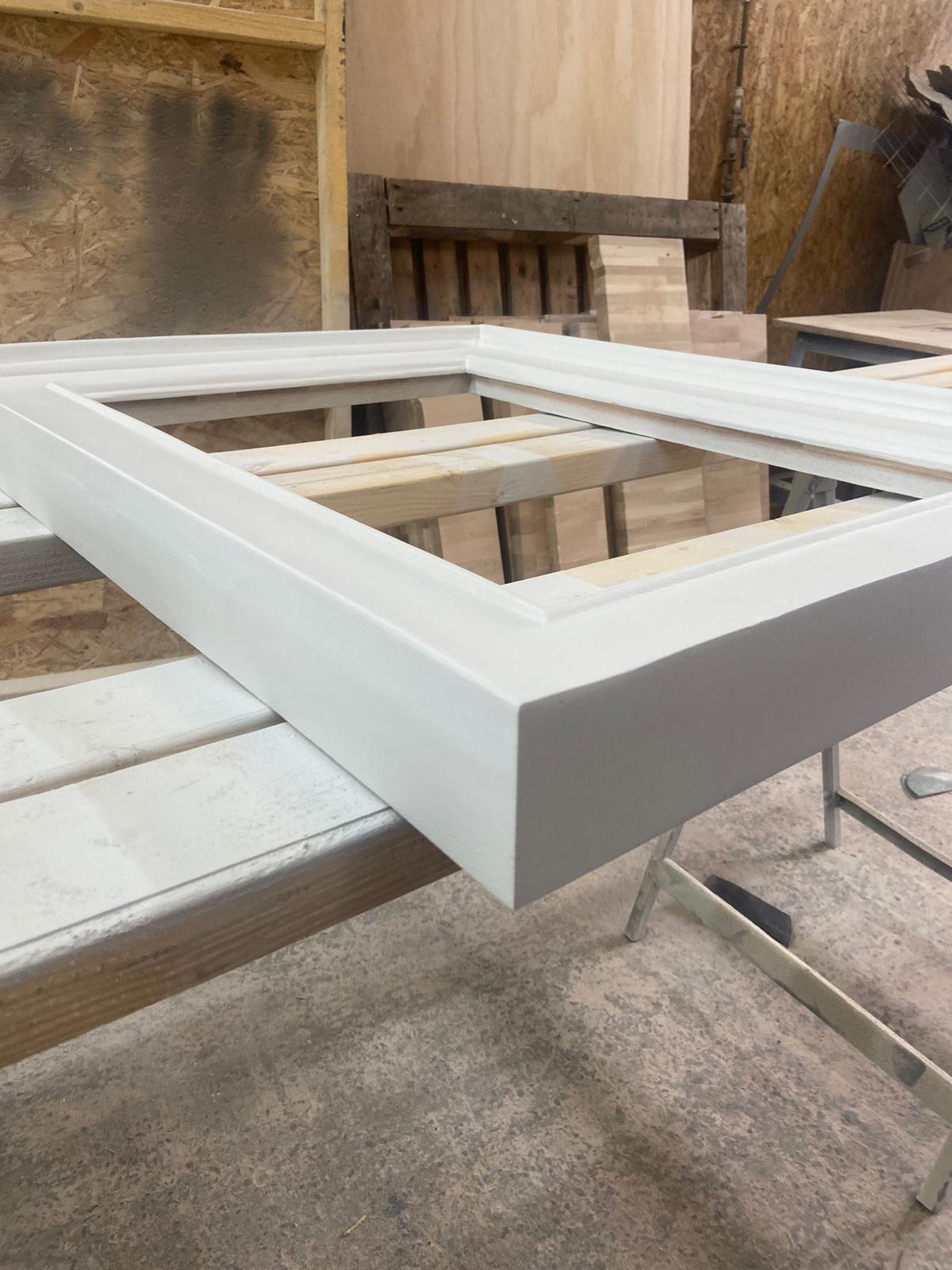
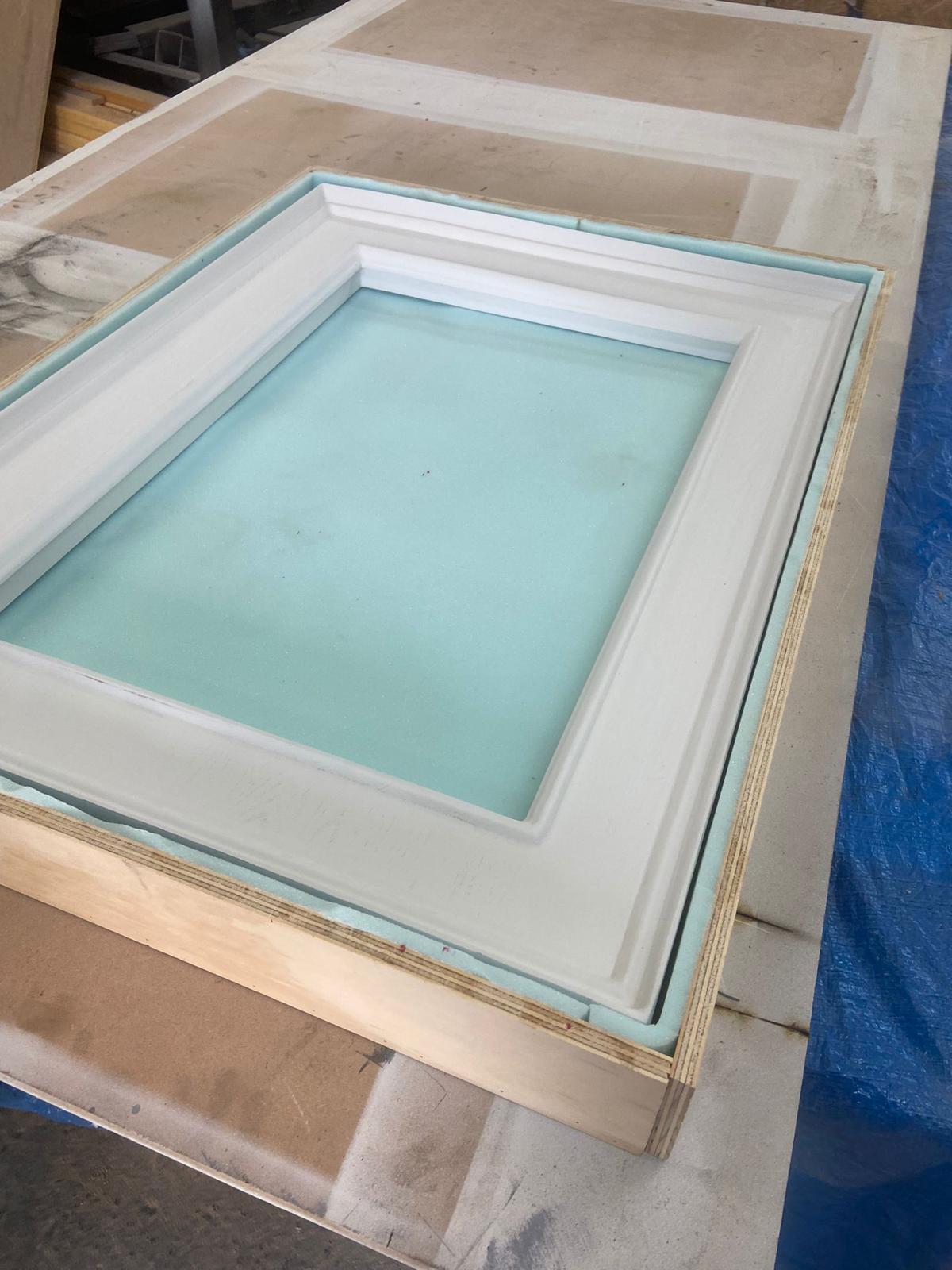
An original da Vinci-era frame, sourced by the artists, 3D scanned and reproduced one-to-one in solid white oak on our CNC routers — every contour, every ding preserved. Primed in Aberdeen, hand-finished in London.
PROCESS
- 01Receive the original frame, sourced by the artists
- 02High-end 3D scan — full geometry capture
- 03Pull scan data into CAD, prep toolpaths
- 04CNC machine in solid white oak — one-to-one replication
- 05Preserve every contour, mark and ding from the original
- 06Prime the frame in Aberdeen
- 07Ship to London for artist hand-embellishment and paint
CASE NOTES
The Connor Brothers had created their own take on a da Vinci oil painting. To go with it, they wanted the frame replicated. Not approximated. Replicated.
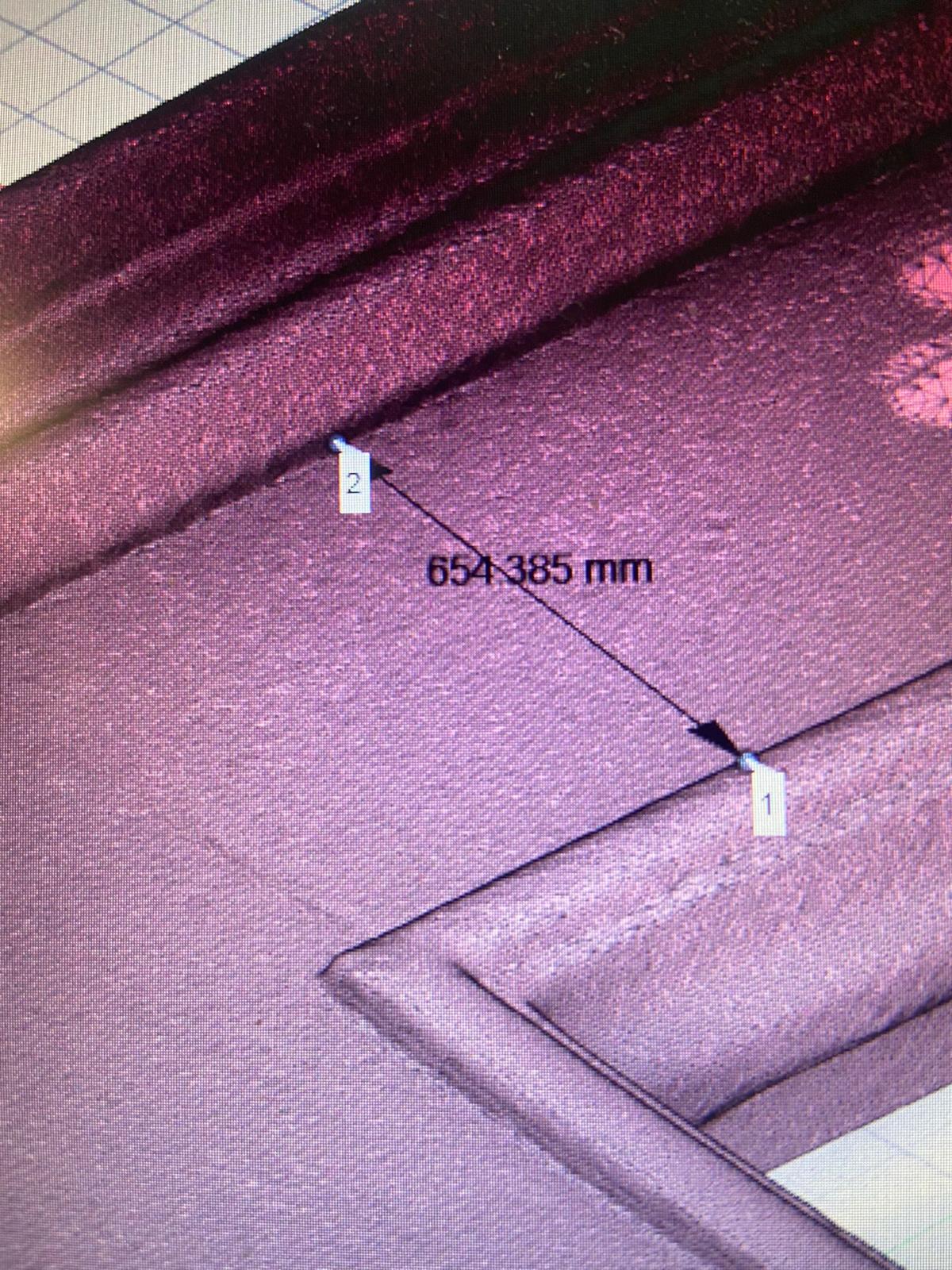
They sourced the original frame and got it to us. We ran it through a high-end 3D scanner, pulled the data into our software, and got to work.
The frame was machined in solid white oak on our CNC routers. Every detail from the scan was reproduced in the cut — every contour, every mark, every ding in the original. One to one. Nothing smoothed out, nothing lost.
Once machined, we primed the frame in Aberdeen before it was shipped down to London, where the Connor Brothers team hand-embellished and hand-painted it to completion.
EVIDENCE — 10 FRAMES
WORKSHOP / STUDIO / GALLERY
PRJ-014d
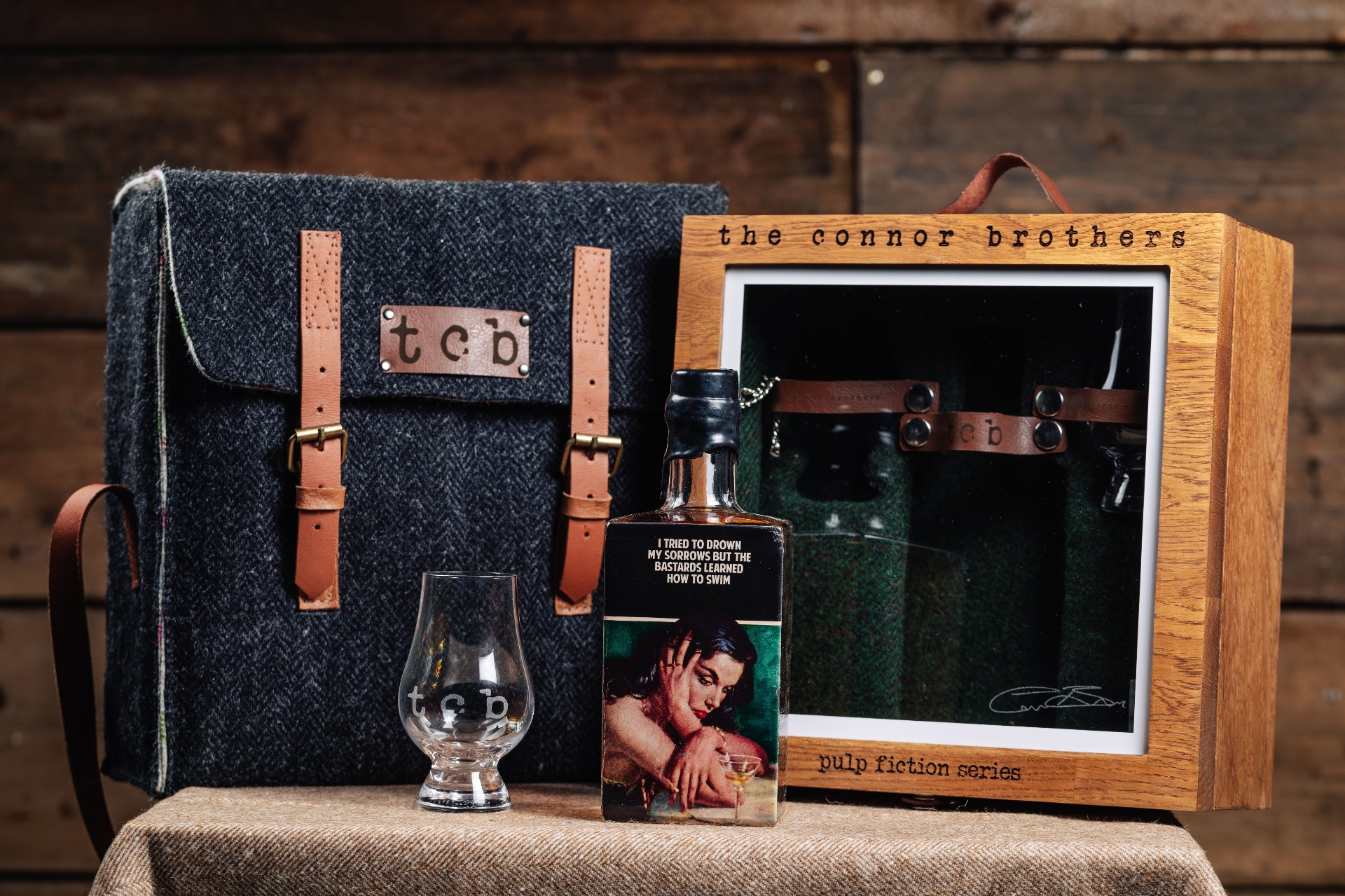
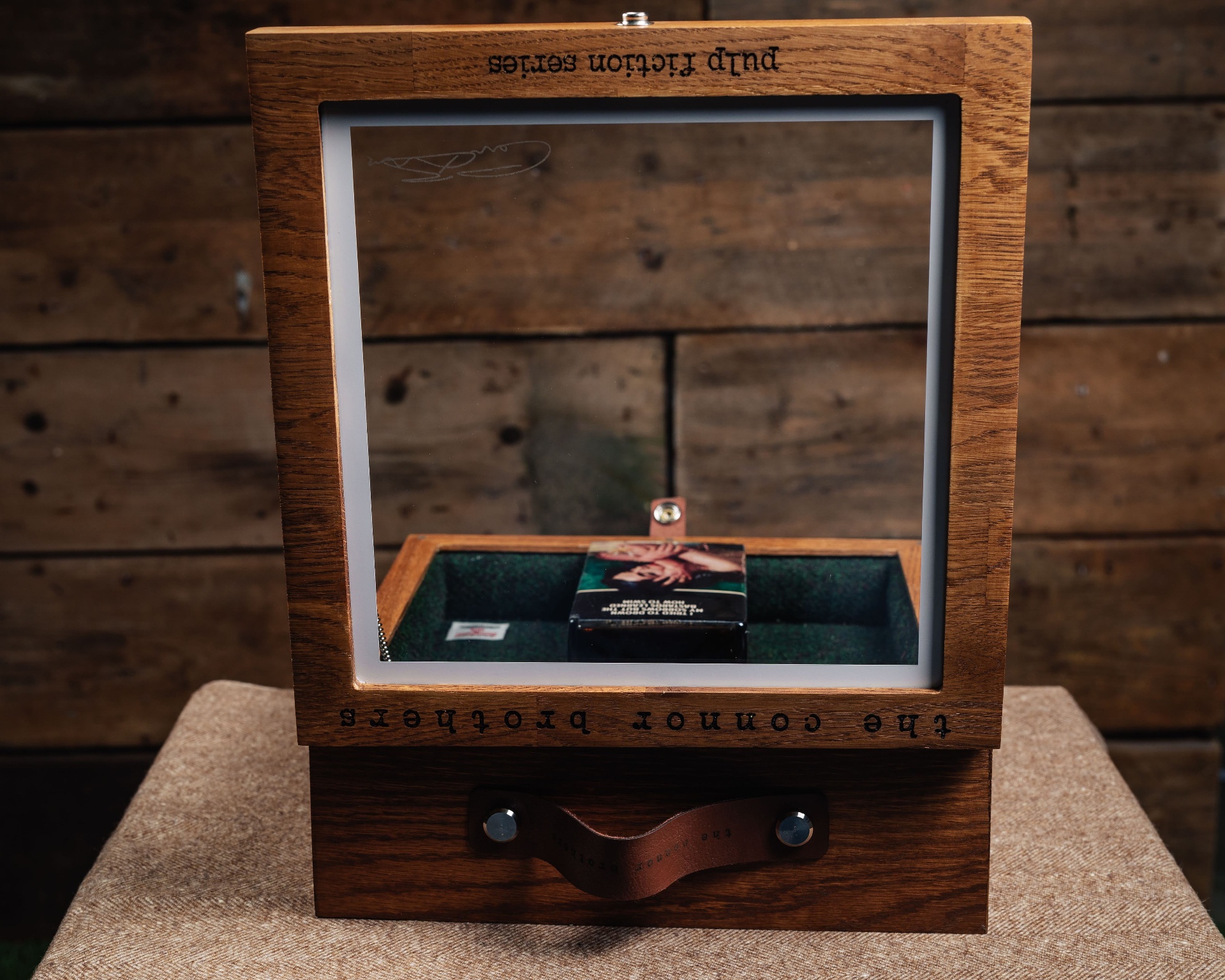
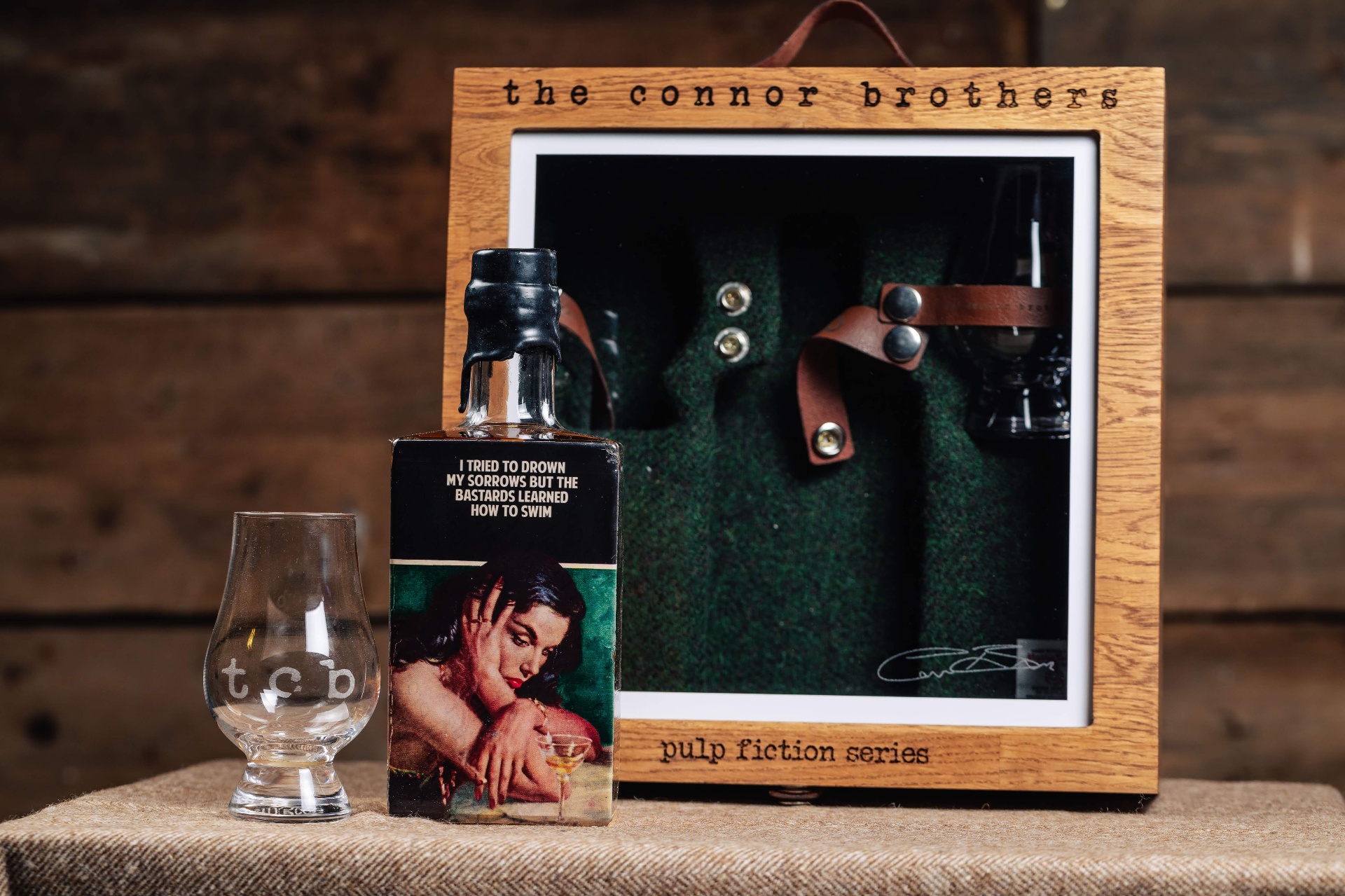
Limited Edition Whisky Boxes — End-to-End In House
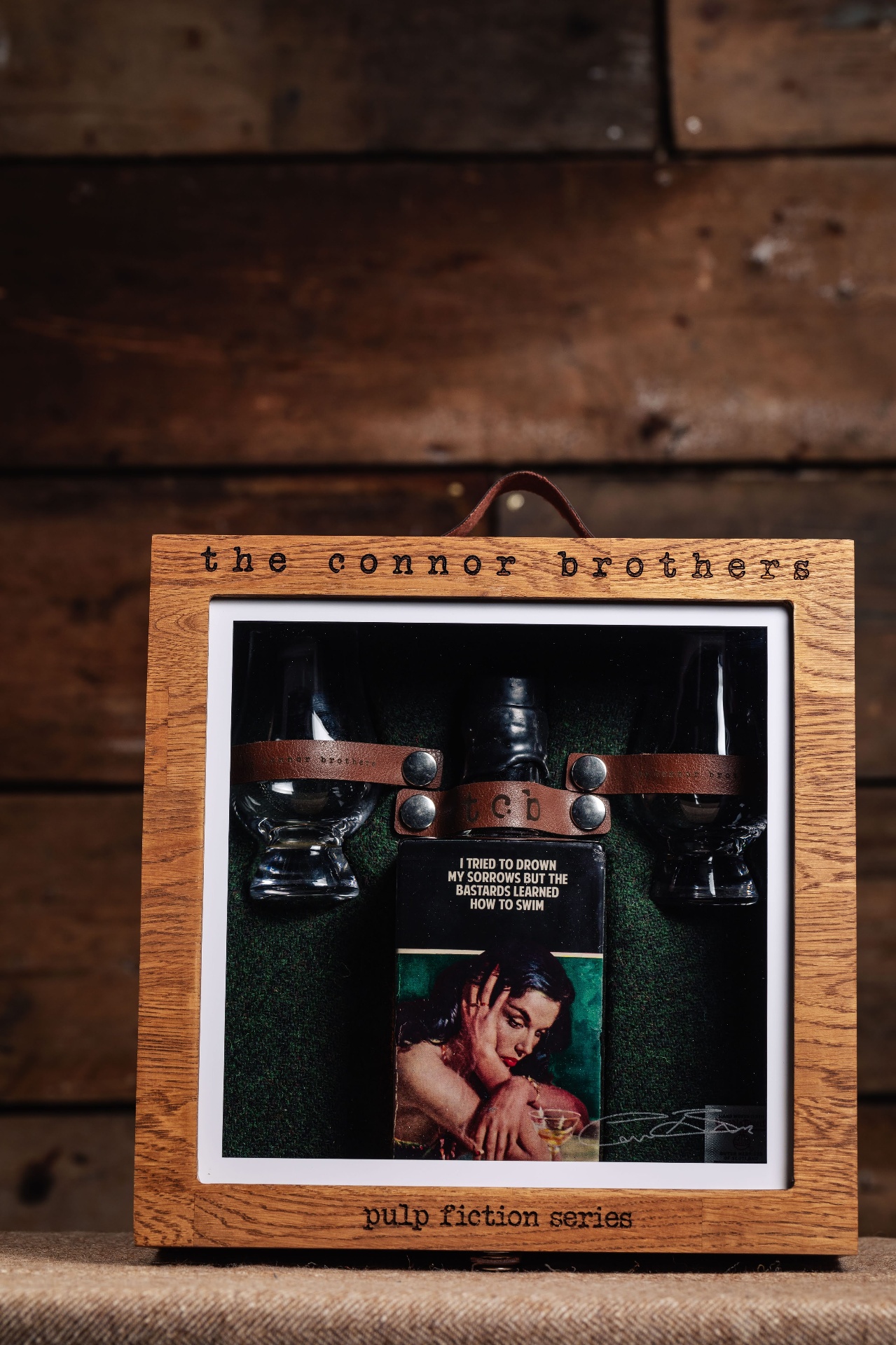
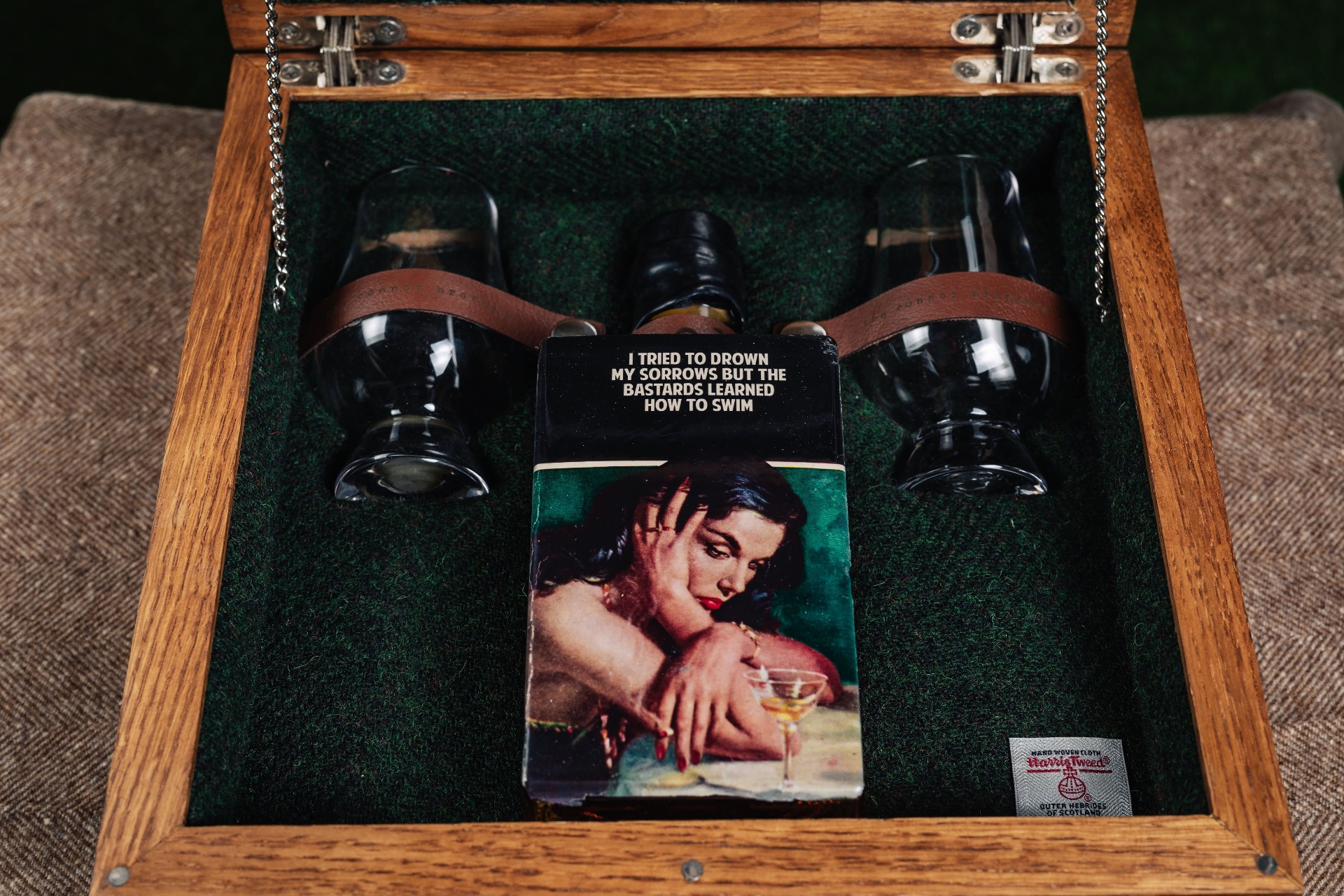
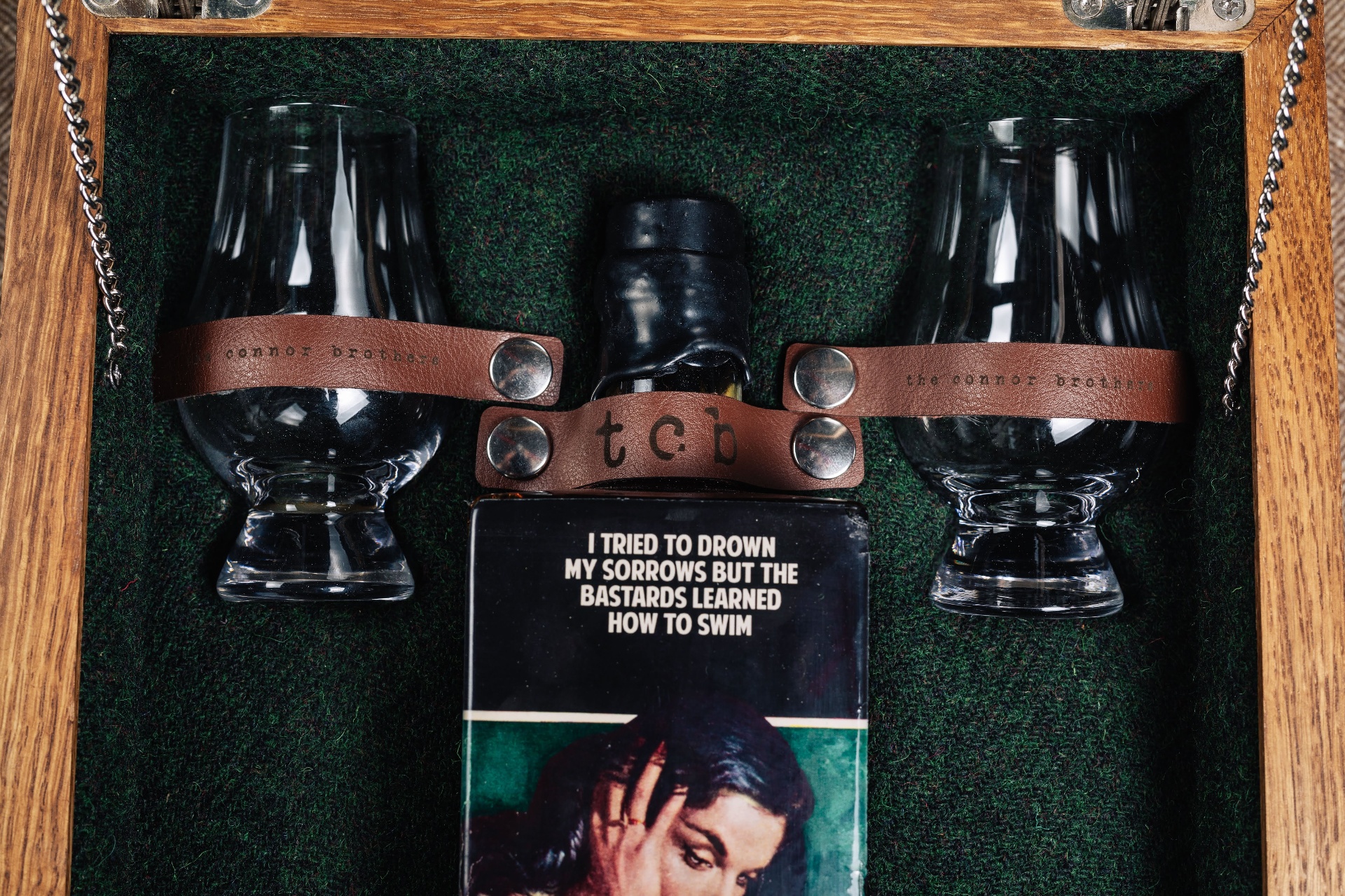
A small run of whisky boxes built entirely in house — bottles powder coated and UV printed, solid white oak boxes laser engraved, Harris Tweed inlays from Scotland and bespoke tweed-and-leather bags. Nothing outsourced. Nothing pre-made.
PROCESS
- 01Sit down with the artists — work through materials, construction, finishes
- 02Powder coat the bottles in house
- 03UV print artwork directly onto the powder-coated surface
- 04Machine the boxes in solid white oak
- 05Laser engrave typography and artist marks
- 06Inlay each box with Harris Tweed from Scotland
- 07Cut, stitch and rivet bespoke Harris Tweed bags with leather details
- 08Hand-fit glasses, leather straps and bottle into each box
CASE NOTES
The Connor Brothers came to us wanting to explore a small run of whisky boxes incorporating their artwork. Before anything was made, we sat down with the team and worked through every detail — materials, construction, finishes, how everything would sit together.
What followed was entirely in house, built from raw materials start to finish.
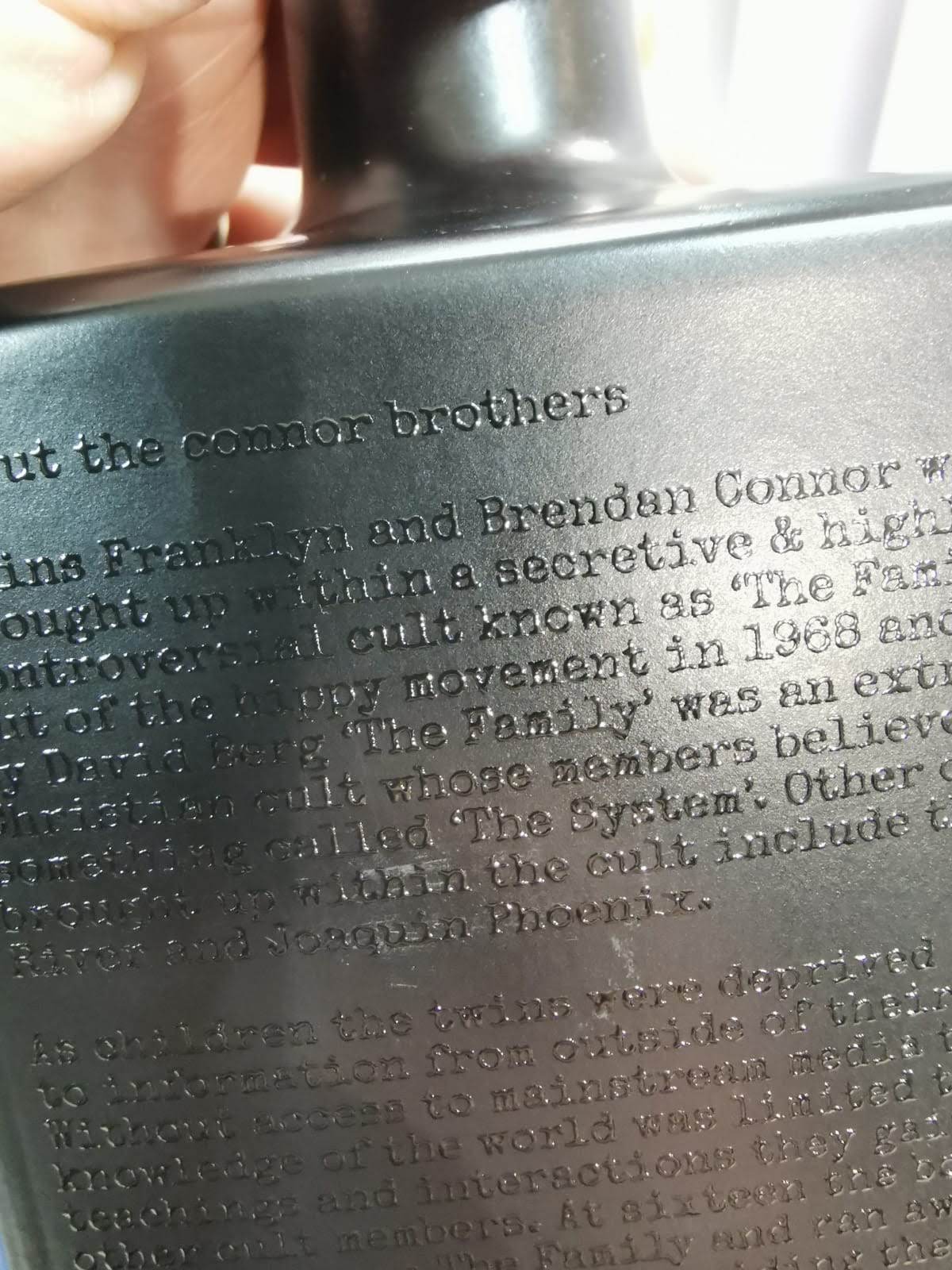
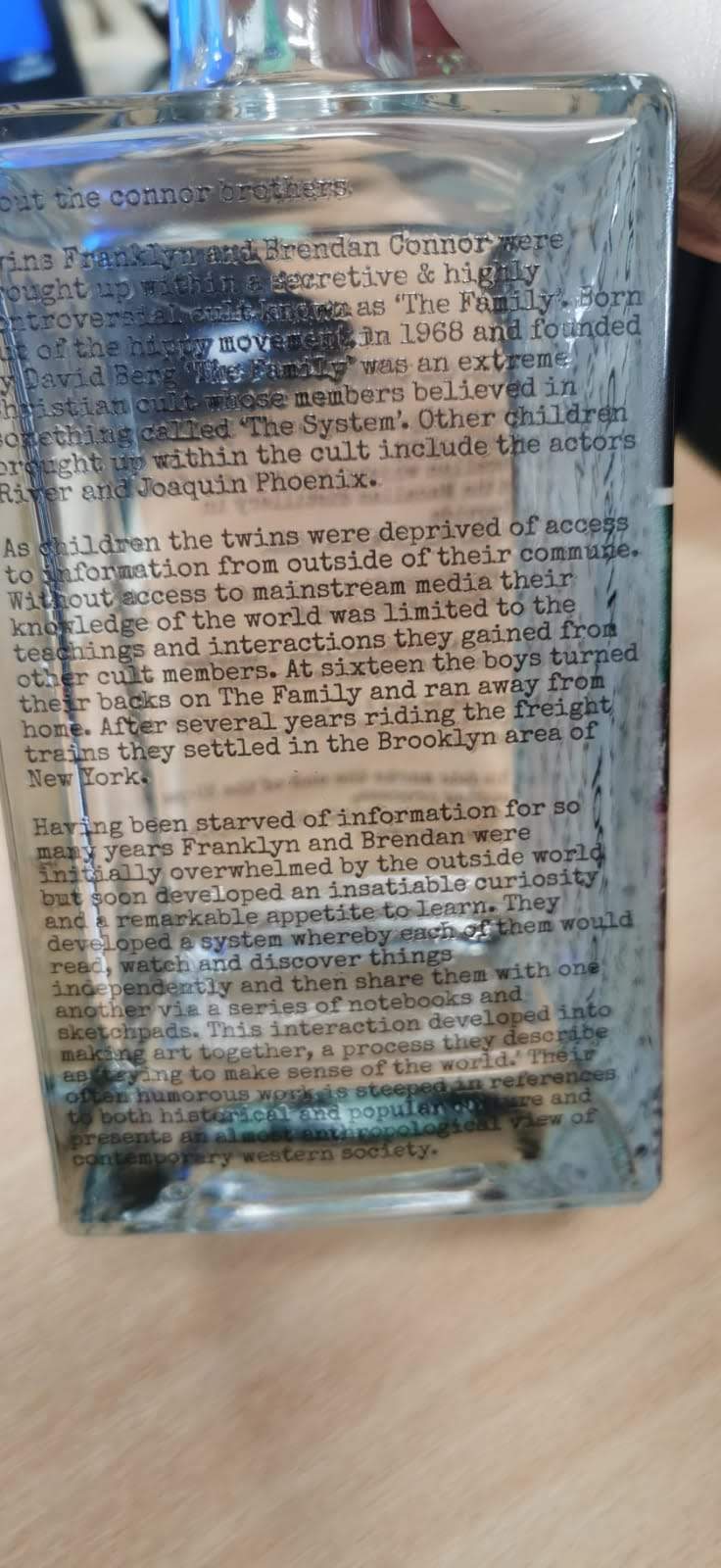
The bottles were powder coated by us, with artwork UV printed directly onto the surface. The boxes were machined in solid white oak and laser engraved. Each box was inlaid with Harris Tweed, sourced from Scotland, and came with a bespoke bag made from Harris Tweed with leather embellishments.
Every element — bottle, box, bag, print, engraving — was conceived, designed, and produced by our team. Nothing was outsourced. Nothing was bought in pre-made.
EVIDENCE — 08 FRAMES
WORKSHOP / STUDIO / GALLERY
PRJ-014e
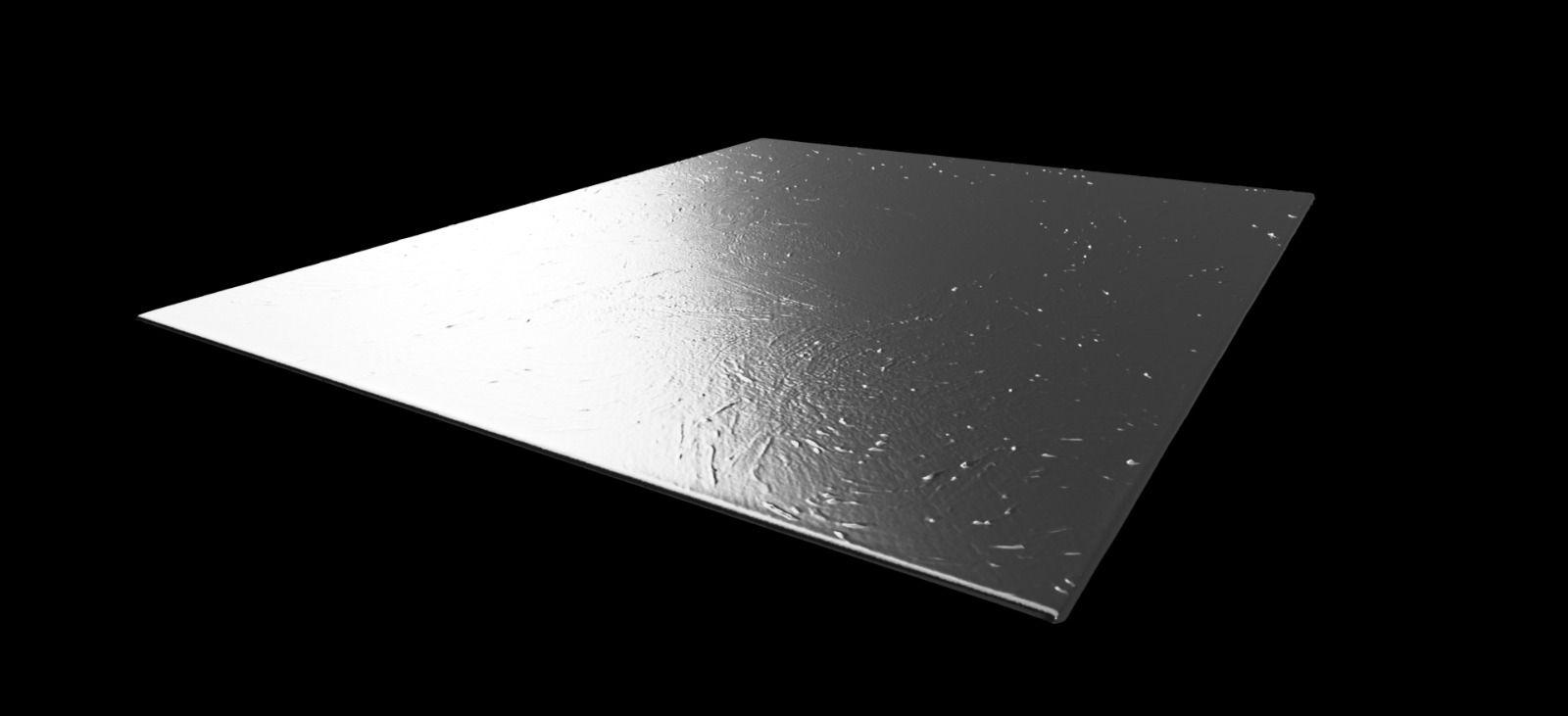
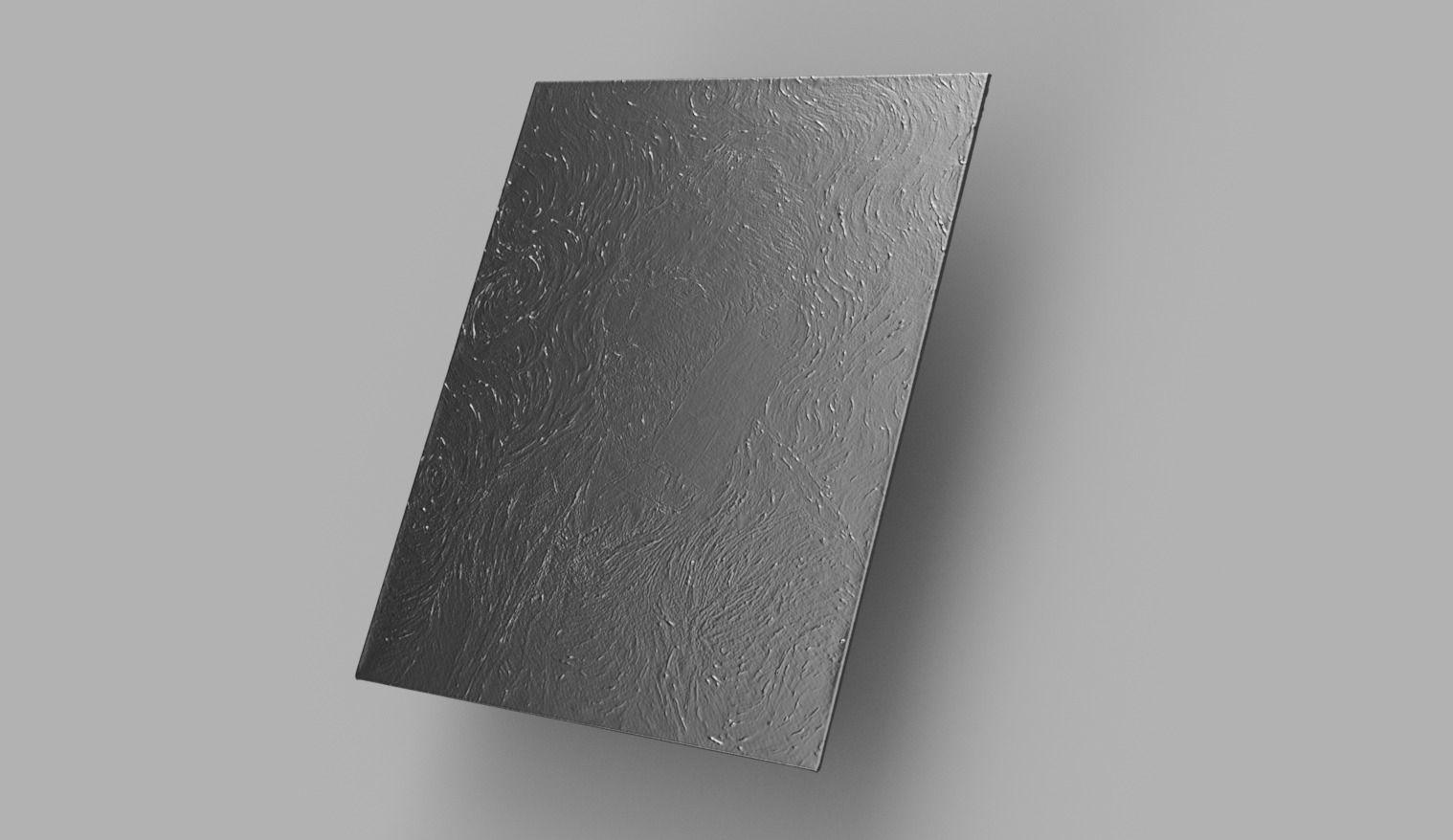
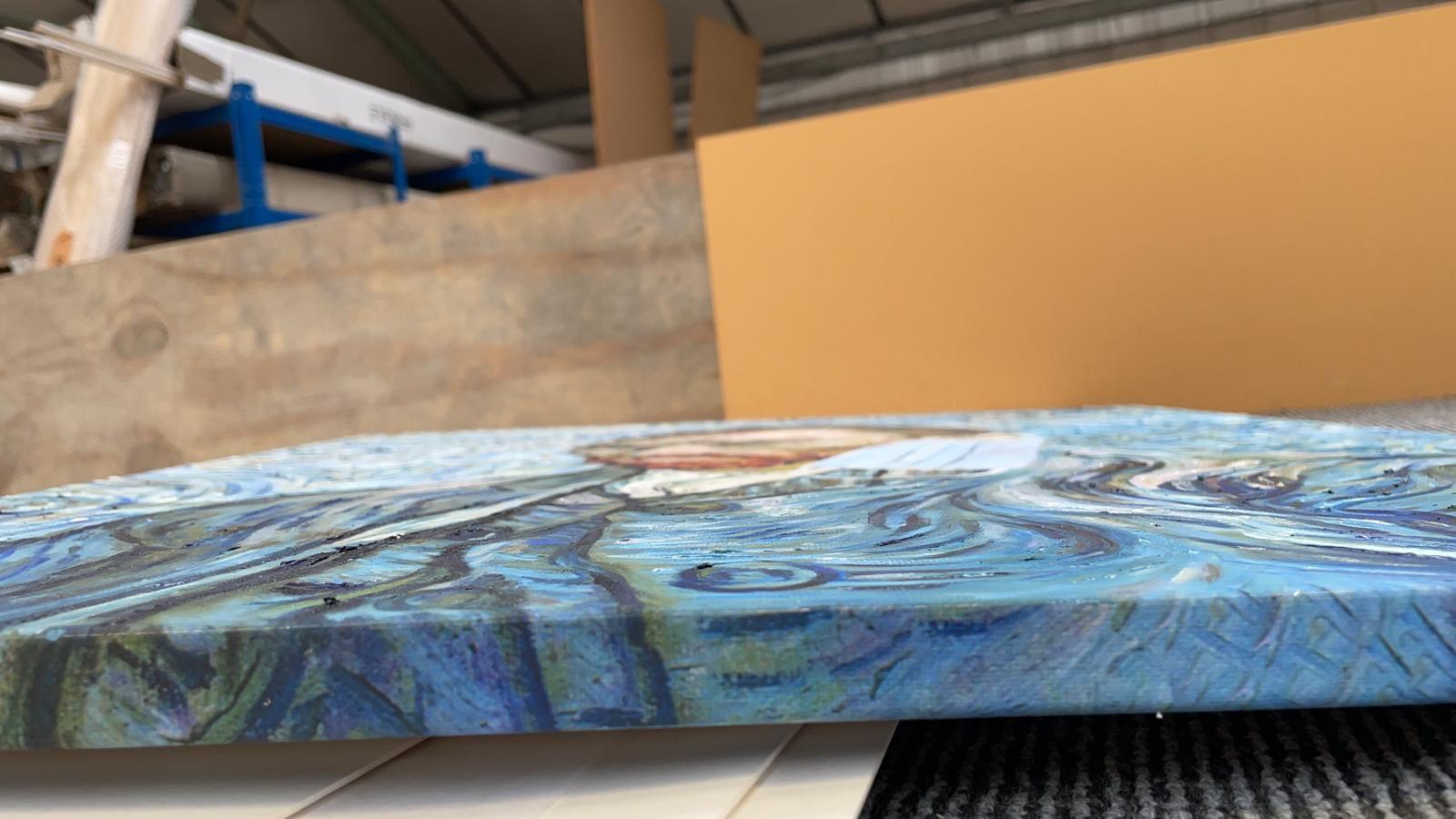
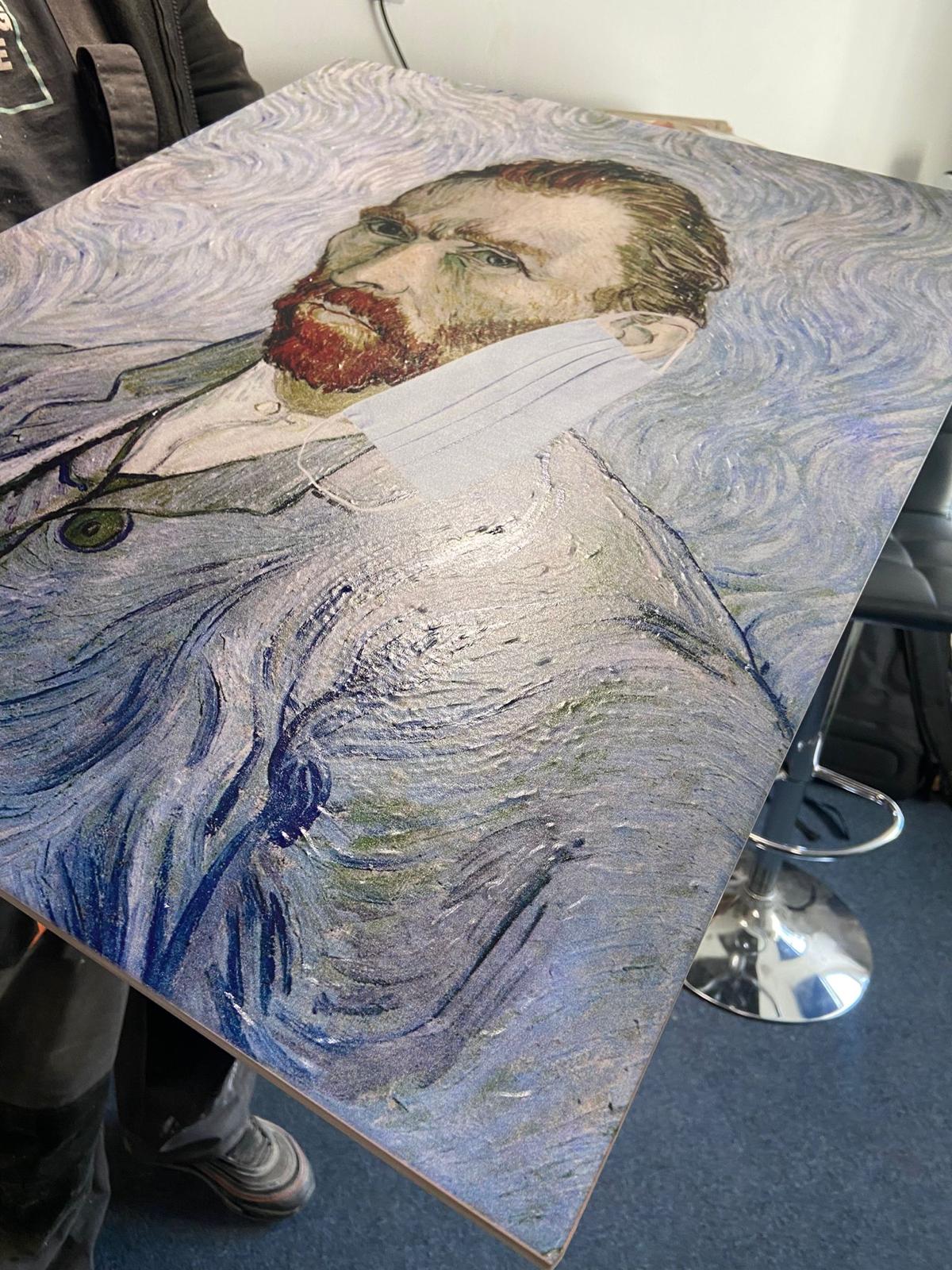
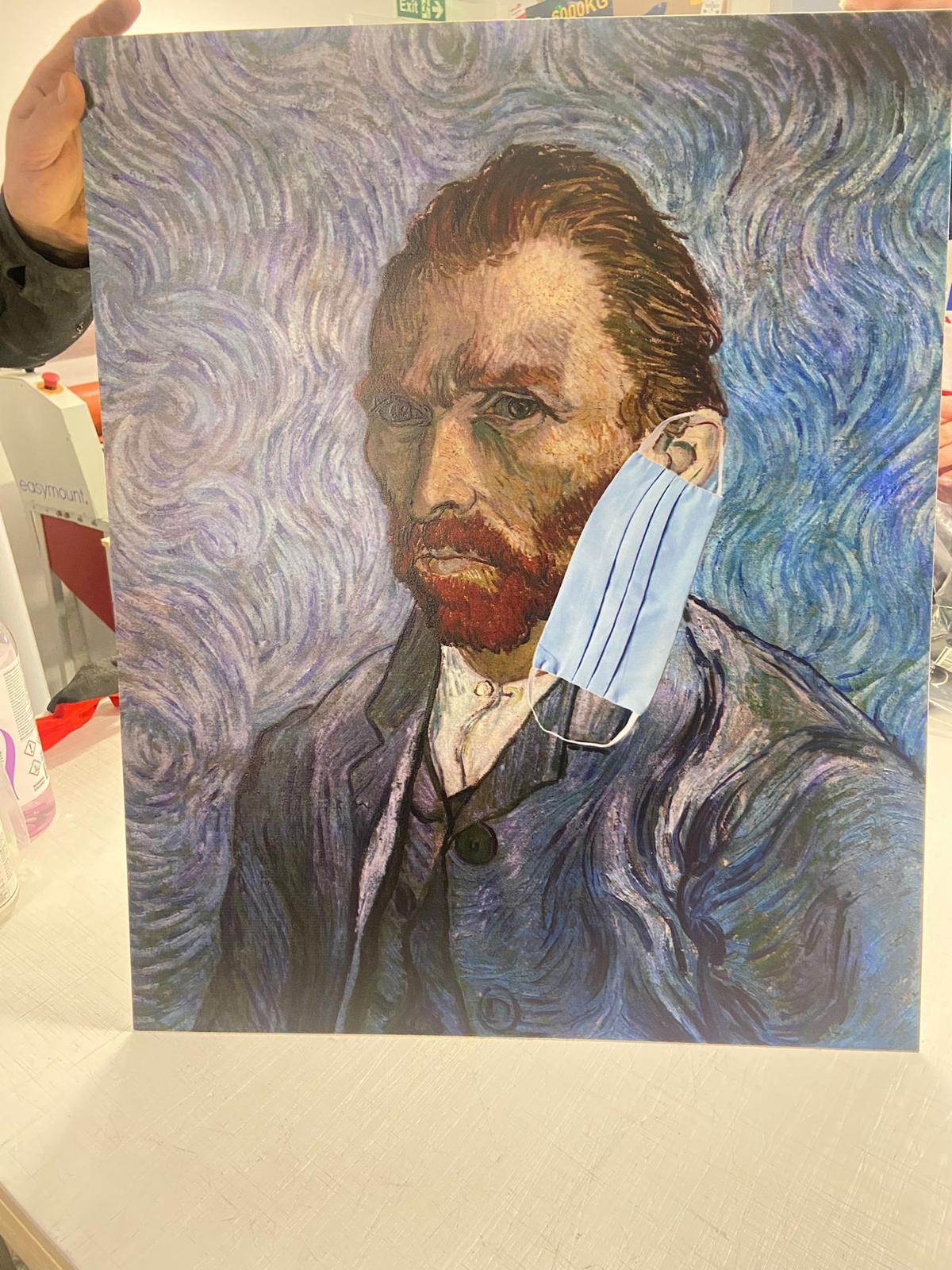
Van Gogh Reproduction — 3D-Scanned Brushstrokes, UV Printed
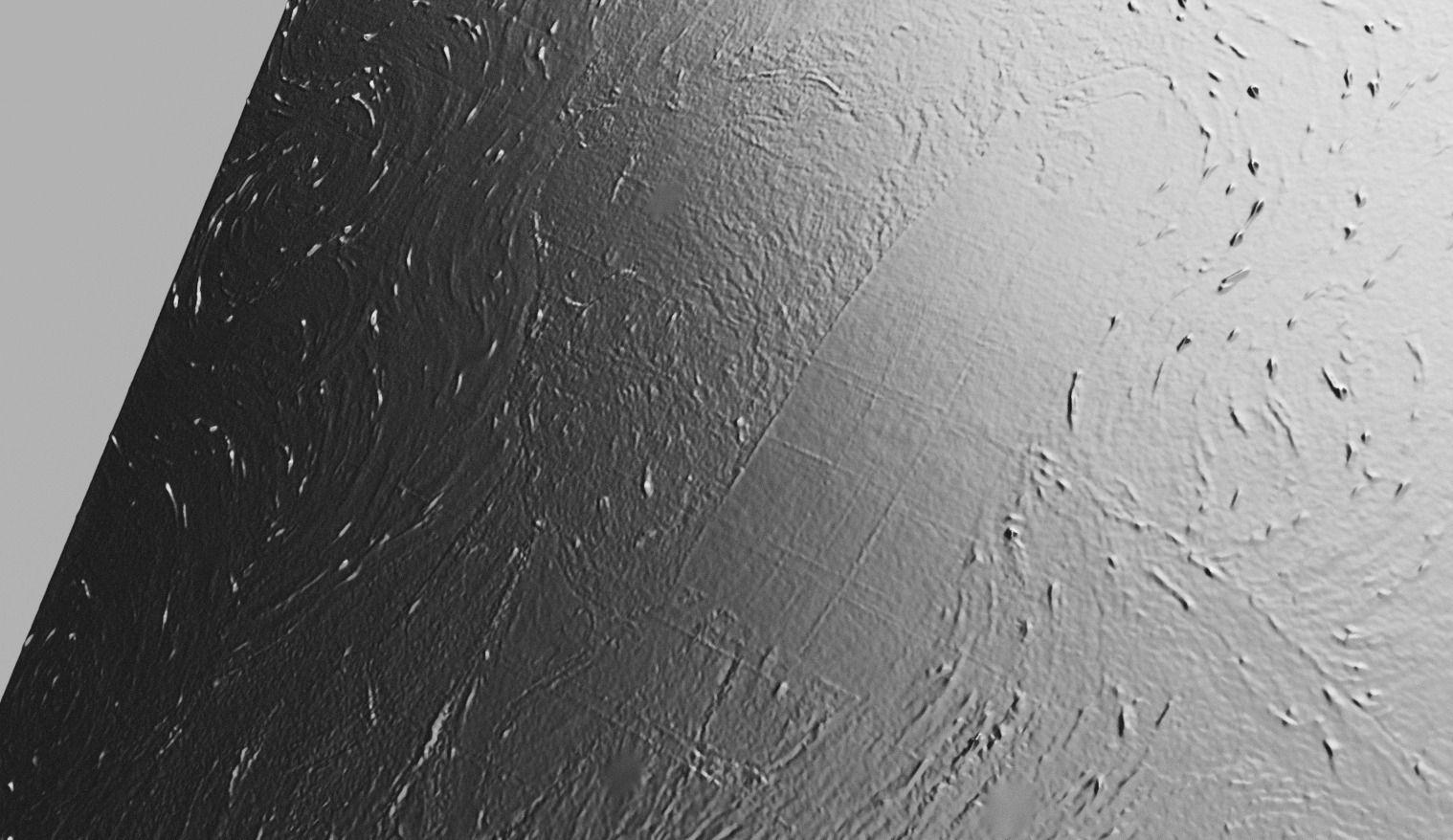
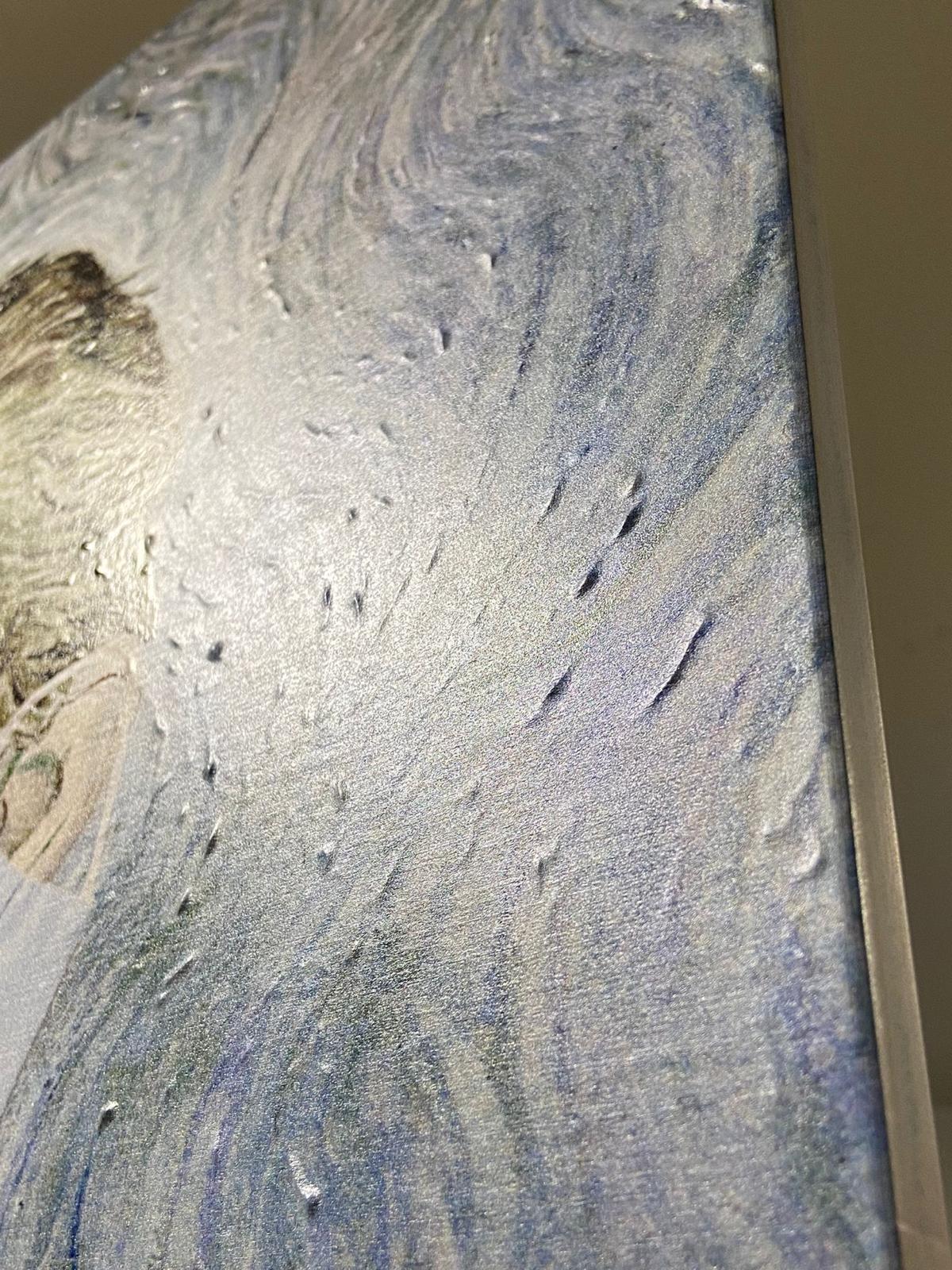
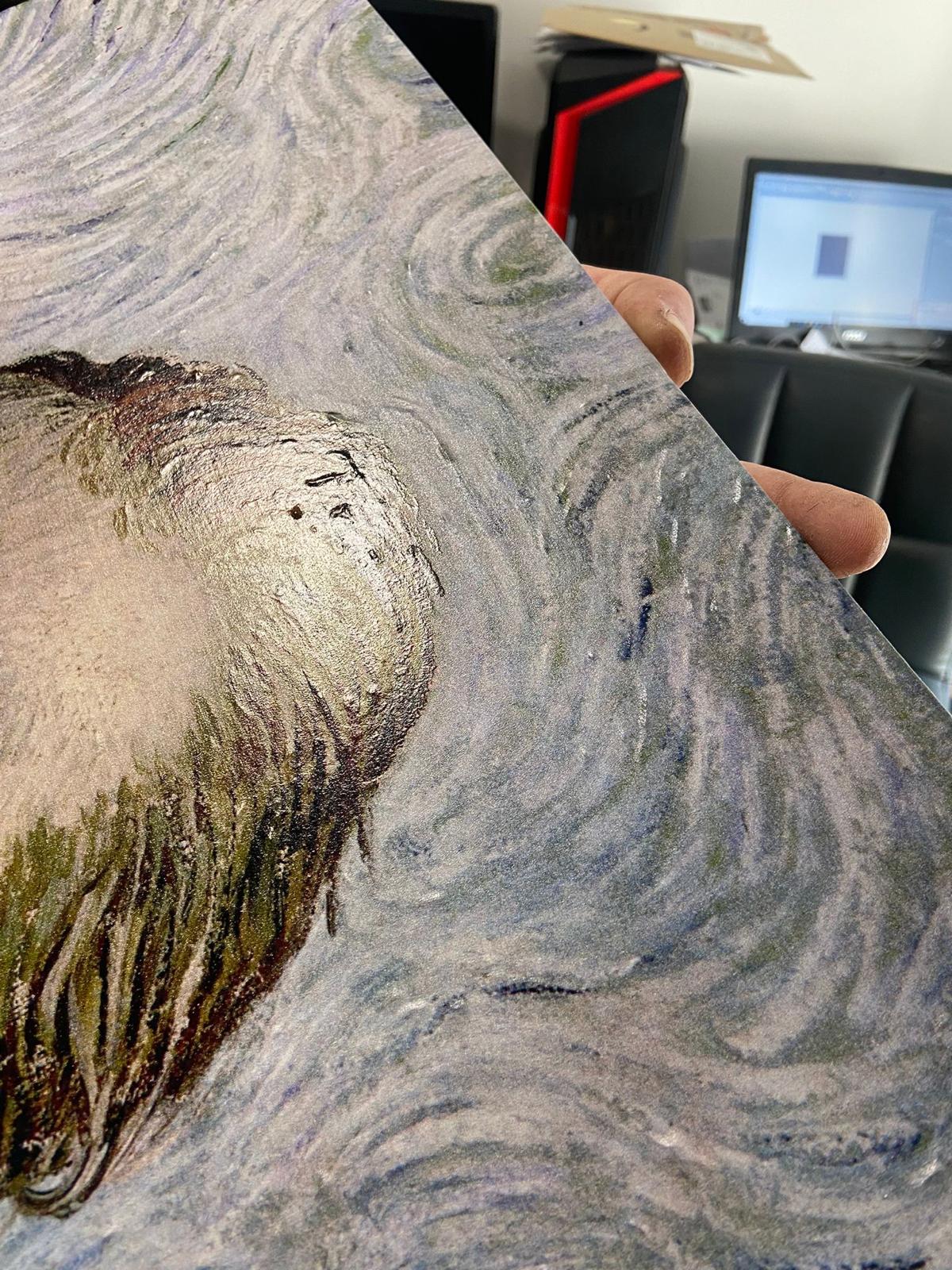
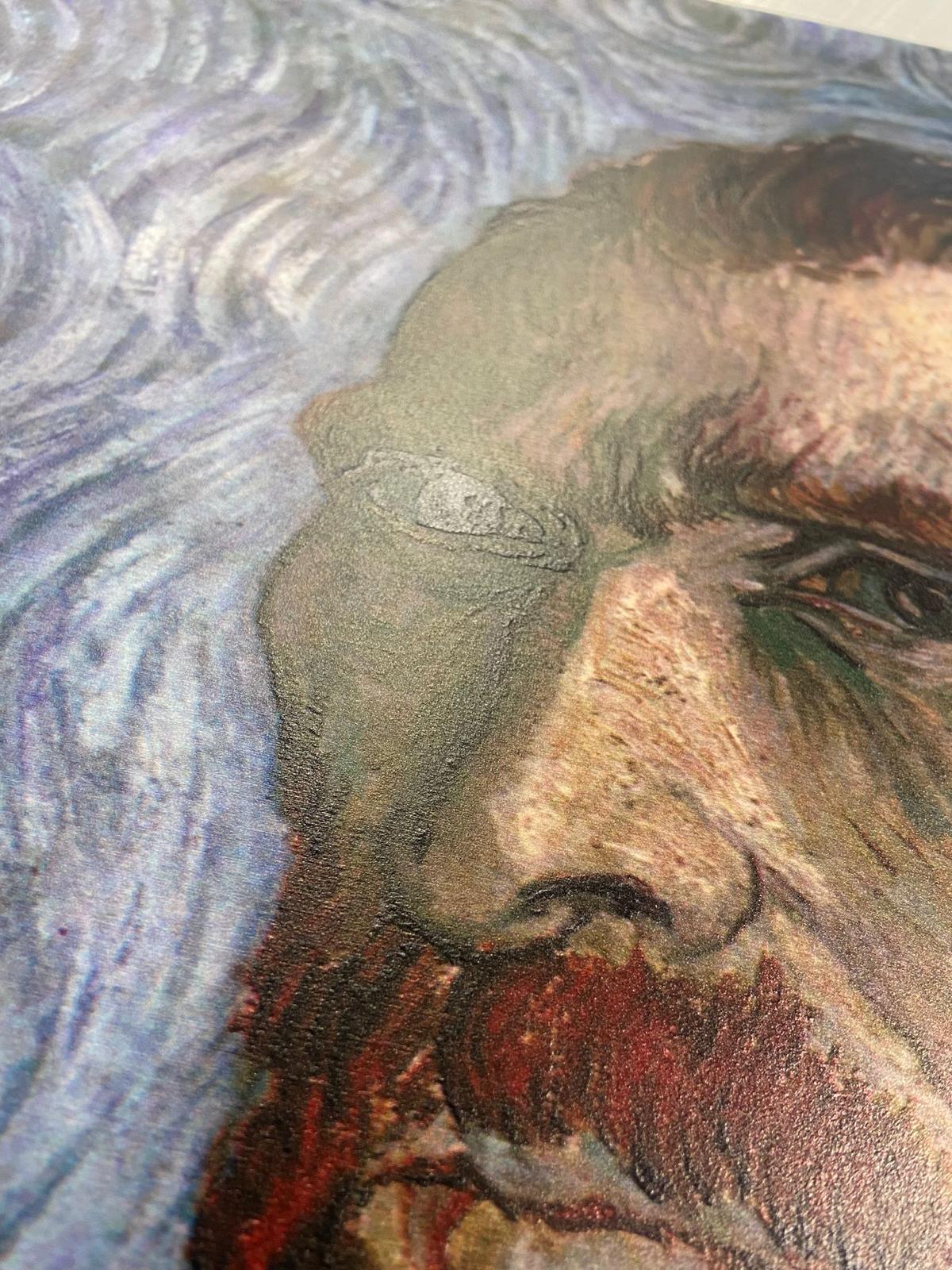
Reproducing one of the Connor Brothers' COVID-era oil paintings without losing the texture. The full painted surface 3D scanned, the topography machined into substrate, then UV printed back over itself — every brushstroke and impasto ridge preserved one-to-one.
PROCESS
- 01Receive the completed Van Gogh oil painting from the artists
- 023D scan the full painted surface — capture every brushstroke and ridge
- 03Build a high-resolution height map from the scan data
- 04CNC machine the texture into a solid substrate
- 05QA the machined surface against the original painting
- 06UV print the image of the painting back over the matched topography
- 07Final pass — register print to surface so brushstrokes line up exactly
CASE NOTES
During COVID, the Connor Brothers completed an oil painting of Van Gogh, produced in their studio. The challenge they brought to us was a specific one — how do you reproduce an oil painting and keep the texture? The brushstrokes, the impasto, the physical surface that makes an oil painting what it is.
We started by 3D scanning the entire surface of the finished painting. That gave us a precise texture profile — every raised brushstroke, every ridge, every dip the artist had created with the paint.
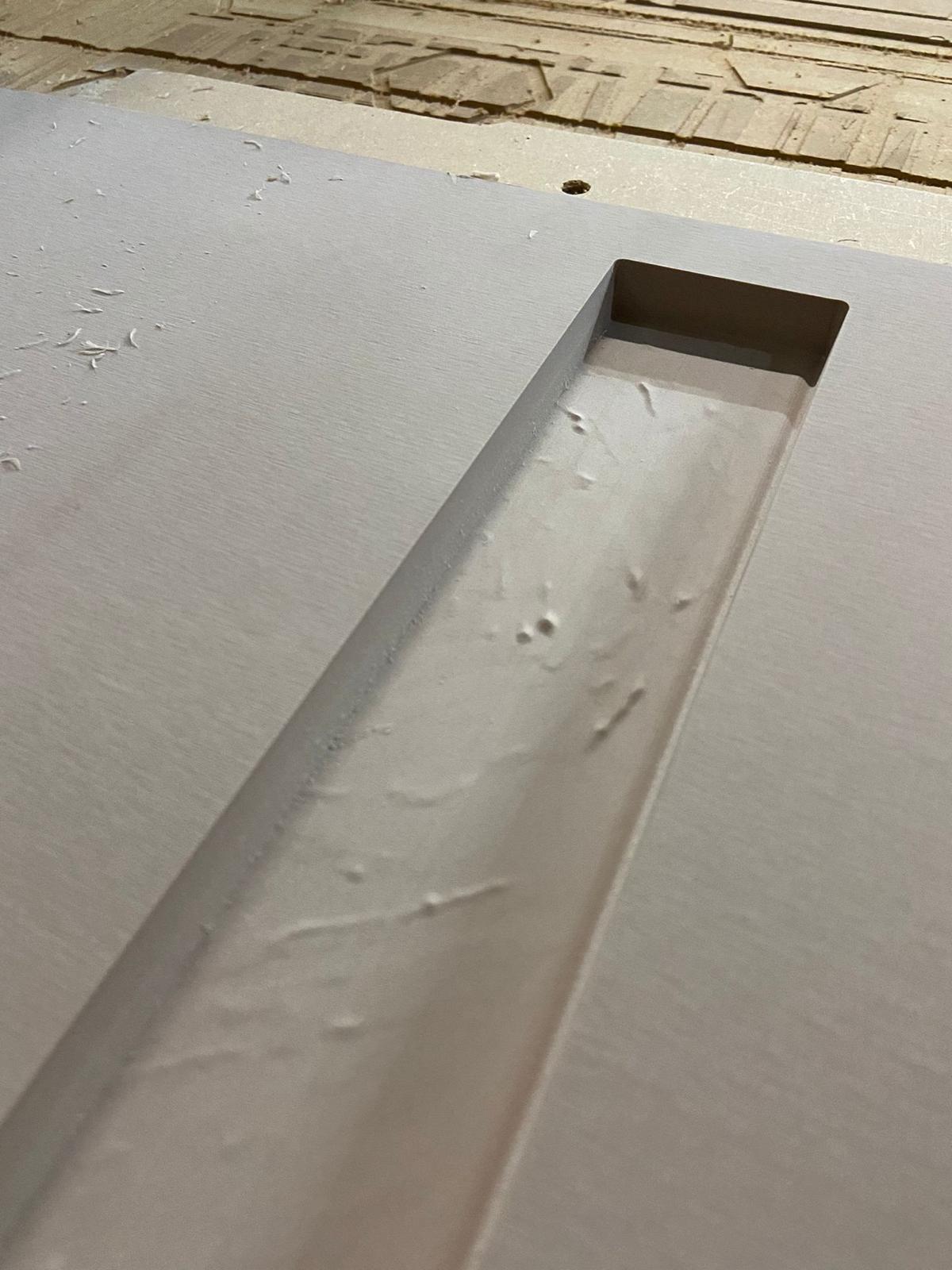
From that data we machined the texture into a solid surface substrate. The result was a physical replica of the painting's topography. We then ran it through the UV printer, printing the image of the painting directly back onto the textured surface.
The finished piece looked and felt like the original. Wherever the Connor Brothers had loaded paint onto the canvas, those same raised areas existed in the reproduction. The brushstrokes were real. The depth was real.
3D scanning, CNC machining, and UV printing — combined to solve a problem that would have been impossible any other way.
EVIDENCE — 10 FRAMES
WORKSHOP / STUDIO / GALLERY